
📜 Chapter 1: Rights and Responsibilities of Citizenship
1.1.1 Rights and Responsibilities of Citizenship
2 paragraphs · 7 questions
Canadian citizens hold both rights and responsibilities. They grew out of the country's history. Canadian law protects them, and they reflect the traditions, identity and values that Canadians share. Canadian law does not come from one single place. Parliament passes laws, and so do the provincial legislatures. English common law is another source. The civil code of France is a source too. Canada also inherited an unwritten constitution from Great Britain. All of these sources work together to secure the freedoms Canadians have today.
Key Facts
- Rights and responsibilities come from Canada's history and shared values
- Laws are passed by Parliament and the provincial legislatures
- English common law and the civil code of France are sources of law
- Canada inherited an unwritten constitution from Great Britain
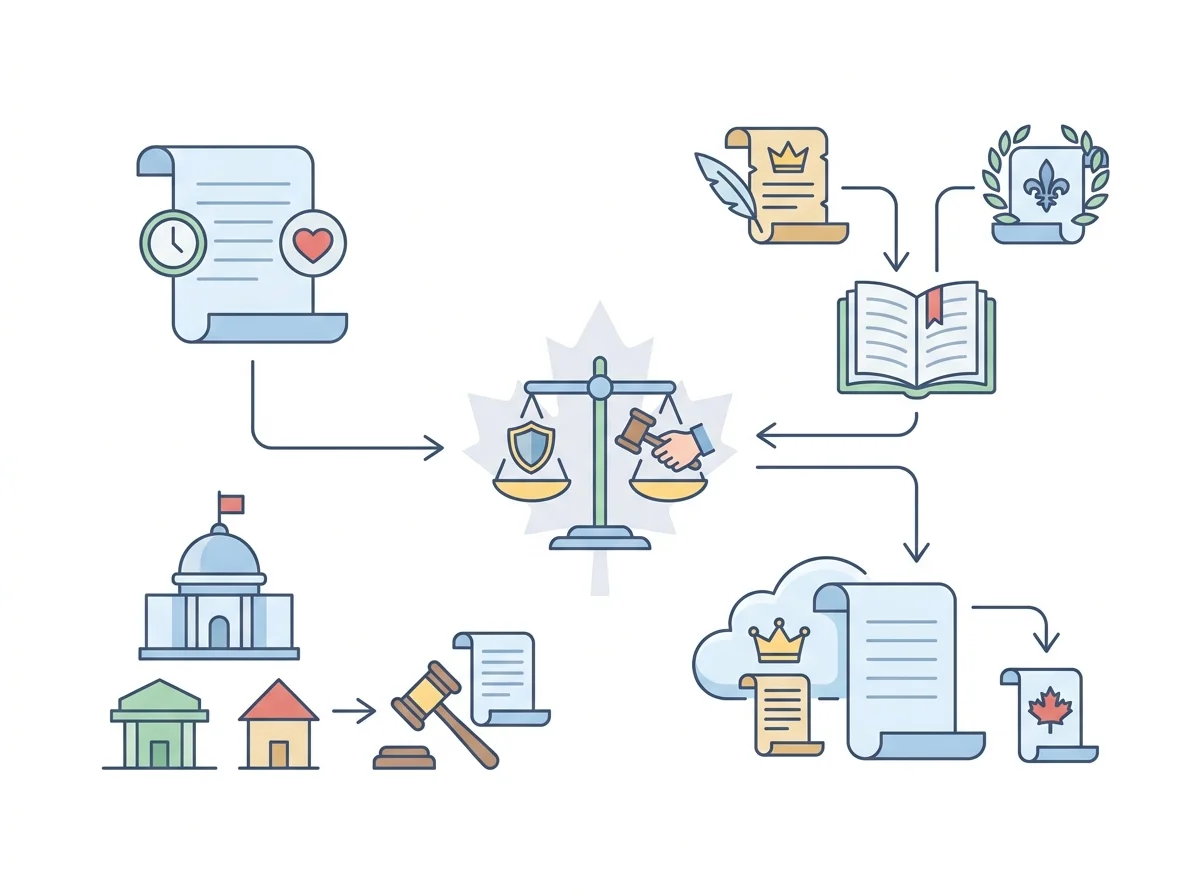
The freedoms Canadians enjoy are not new. Together they form a tradition of ordered liberty that reaches back about 800 years. That tradition began with Magna Carta, signed in England in 1215. Magna Carta carries a second name: the Great Charter of Freedoms. Canada did not invent these ideas. They travelled down through history and through English law, and Canadian law protects them now. Because of this long line, people in Canada can believe, speak, meet and organize freely inside a system of order and law.
Key Facts
- Magna Carta was signed in England in 1215
- Magna Carta is also called the Great Charter of Freedoms
- It began an 800-year tradition of ordered liberty
Test yourself on this topic
7 practice questions from “Rights and Responsibilities of Citizenship”, each with the answer explained.
- In which year was Magna Carta signed in England?
- Magna Carta is also known by which other name?
- How long is the tradition of ordered liberty that Canadians have inherited?
- Which two of these are named as sources of Canadian law?
- Canada's unwritten constitution was inherited from which country?
- Which bodies pass the written laws that form part of Canadian law?
- Where do Canadians' rights and responsibilities come from?
Advertisement