
🍁 Chapter 2: Who We Are
2.2.1 Aboriginal Peoples
2 paragraphs · 5 questions
The ancestors of Aboriginal peoples are thought to have come here from Asia many thousands of years ago. They were living across the land, well established, long before the first explorers arrived from Europe. First Nations cultures were many and varied, and full of life. Faith stood at the centre of them: beliefs about the Creator, about the natural world around them, and about how people should treat one another. There was never one single Aboriginal way of life, but many, spread over a very large territory.
Key Facts
- Ancestors are believed to have migrated from Asia thousands of years ago
- They were established here before European explorers came
- First Nations beliefs centred on the Creator, nature and each other
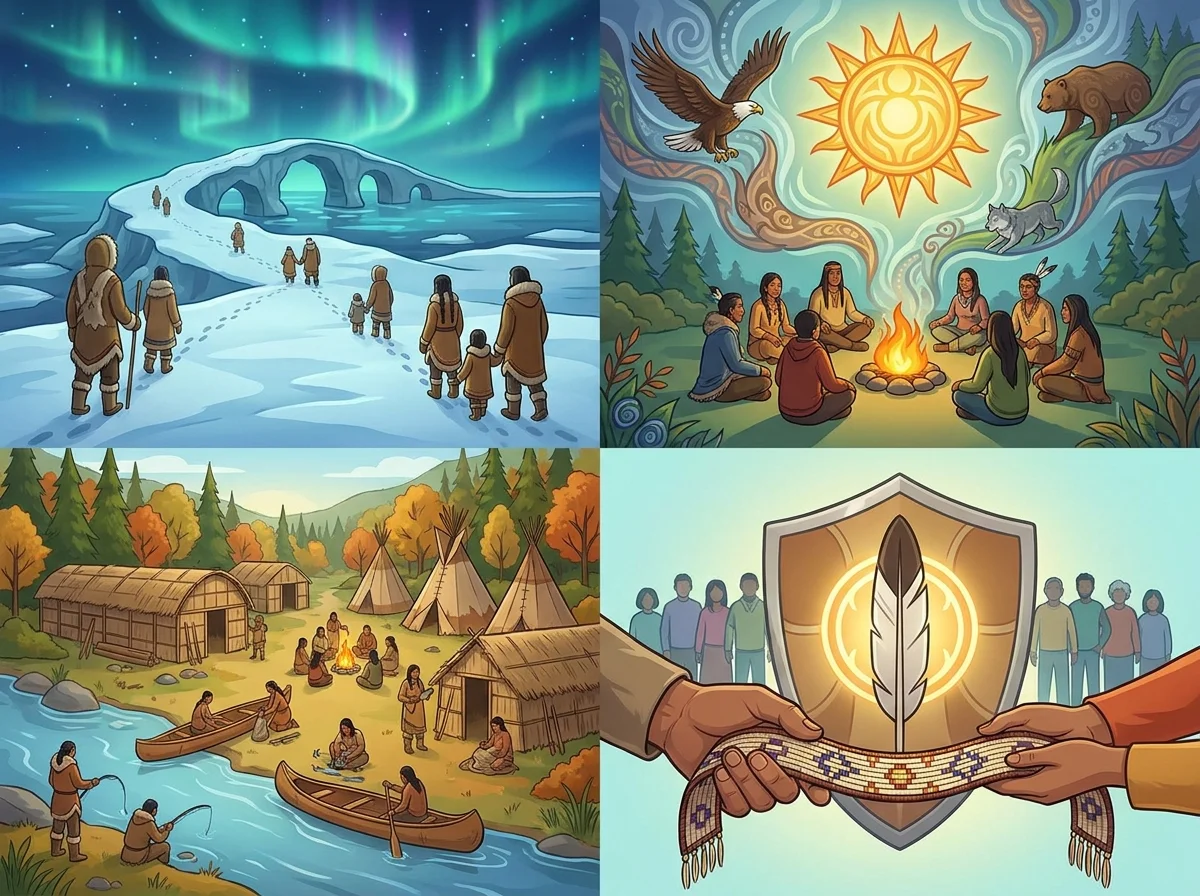
The Canadian Constitution protects both Aboriginal rights and treaty rights. Land rights were first guaranteed in 1763, when King George III issued the Royal Proclamation. That document set out how treaties with the newcomers would be negotiated. Many treaties followed over the years, but they were not always honoured in full. The Proclamation of 1763 still matters today, because it is the starting point of the legal relationship between Aboriginal peoples and the Crown.
Key Facts
- The Constitution protects Aboriginal rights and treaty rights
- Royal Proclamation of 1763, issued by King George III
- It created the basis for negotiating treaties with newcomers
- Treaties were not always fully respected
Test yourself on this topic
5 practice questions from “Aboriginal Peoples”, each with the answer explained.
- Where are the ancestors of Aboriginal peoples believed to have come from?
- Aboriginal and treaty rights are protected in which document?
- Which document of 1763 first guaranteed Aboriginal territorial rights?
- Which monarch issued the Royal Proclamation of 1763?
- What did the Royal Proclamation of 1763 set the basis for?
Advertisement