
🏛️ Chapter 3: Canada's History
3.5.4 Between the Wars
2 paragraphs · 5 questions
Once the First World War ended, the British Empire became a free association of states. The British Commonwealth of Nations was its new name. Canada still stands among the Commonwealth's leading members. So do other countries that grew out of the Empire — India, Australia and New Zealand among them, plus several in Africa and the Caribbean. The 1920s were boom years, and they earned the nickname "Roaring Twenties." Businesses did well during that decade, and few people were out of work.
Key Facts
- The Empire became the British Commonwealth of Nations
- Canada is a leading Commonwealth member
- Other members include India, Australia and New Zealand
- The "Roaring Twenties" were prosperous years with few people jobless
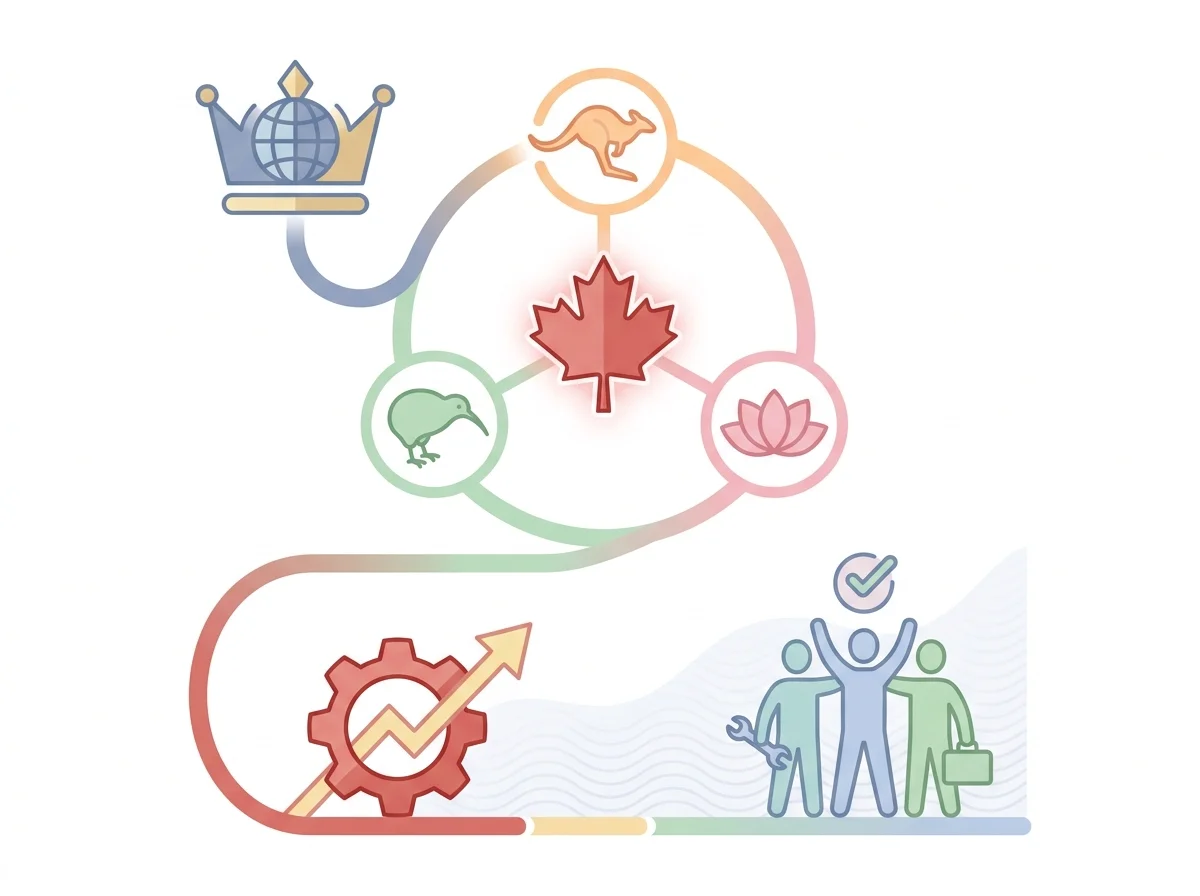
When the stock market crashed in 1929, the Great Depression followed - the years known as the "Dirty Thirties." By 1933 unemployment stood at 27%, and countless businesses were wiped out. The worst blow fell on Western Canada's farmers, who faced a terrible drought and low grain prices. People pressed the government for a social safety net: a standard work week, minimum wages, and schemes like unemployment insurance. A central bank arrived in 1934, the Bank of Canada, set up to steady the financial system and manage the money supply. Fewer immigrants came, and many refugees were refused entry, among them Jews fleeing Nazi Germany in 1939.
Key Facts
- 1929 stock market crash led to the Great Depression
- Unemployment hit 27% in 1933
- Western farmers suffered low grain prices and severe drought
- Bank of Canada created in 1934; Jewish refugees turned away in 1939
Test yourself on this topic
5 practice questions from “Between the Wars”, each with the answer explained.
- What did the British Empire become after the First World War?
- What event brought on the Great Depression?
- How high did unemployment climb in 1933?
- Why was the Bank of Canada set up in 1934?
- Which refugees were turned away by Canada in 1939?
Advertisement