🌆 Chapter 4: Modern Canada
4.1.1 Trade and Economic Growth
2 paragraphs · 4 questions
After the Second World War, Canada grew rich. During the Depression years many countries had blocked trade. New treaties opened it up again. One was the General Agreement on Tariffs and Trade, known as GATT. GATT later became the World Trade Organization, or WTO. Another change came from under the ground. In 1947 oil was found in Alberta. That find started the modern Canadian energy industry. Together, freer trade and new energy wealth pushed the country forward. Postwar Canada saw record prosperity and real material progress for ordinary families.
Key Facts
- GATT reopened trade blocked during the Depression era
- GATT is now the World Trade Organization (WTO)
- Oil found in Alberta in 1947 began the modern energy industry
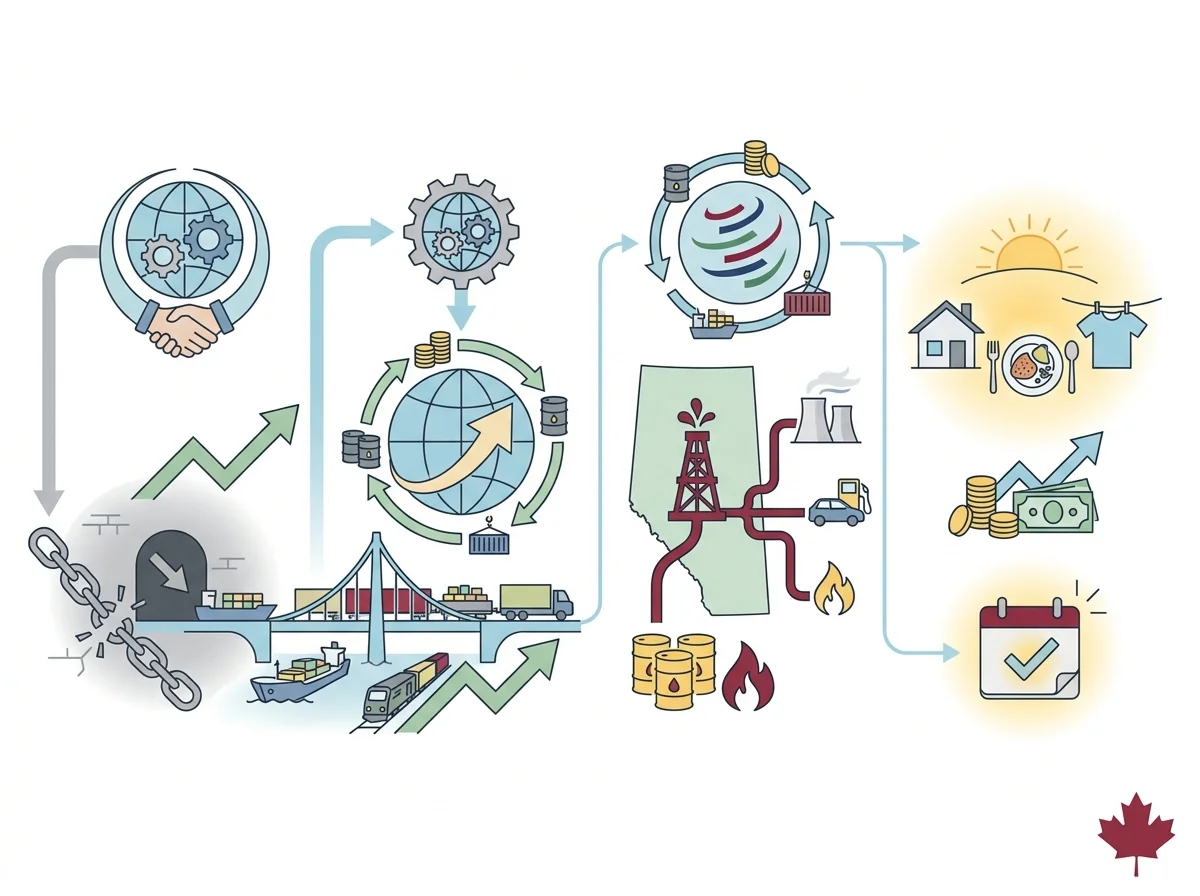
In 1951 something new happened. For the first time, most Canadians could pay for enough food, housing and clothing. Between 1945 and 1970 Canada moved closer to the United States and to other trading partners. During those years its economy was among the strongest in the industrial world. Canadians still enjoy one of the highest living standards on earth. Two things keep it that way. The first is the hard work of Canadians themselves. The second is trade with other nations, above all with the United States.
Key Facts
- 1951: most Canadians could first afford food, shelter and clothing
- 1945-1970: among the strongest economies in the industrial world
- The United States is Canada's most important trading partner
Test yourself on this topic
4 practice questions from “Trade and Economic Growth”, each with the answer explained.
- Which agreement opened up Depression-era trade restrictions and is now the World Trade Organization?
- In what year was oil discovered in Alberta, launching Canada's modern energy industry?
- In which year could a majority of Canadians first afford adequate food, shelter and clothing?
- Which country is Canada's most important trading partner?
Advertisement