
⚖️ Chapter 5: How Canadians Govern Themselves
5.2.1 Parliamentary Democracy
2 paragraphs · 5 questions
In a parliamentary democracy the people do not write the laws themselves. They elect others to do it for them. Canadians vote for members of the House of Commons in Ottawa, and also for members of their provincial or territorial legislature. Those elected members have three main jobs. They pass laws. They approve public spending and then keep watch over how the money is actually used. And they hold the government to account for what it does and fails to do.
Key Facts
- Voters elect members to the House of Commons in Ottawa
- Voters also elect provincial and territorial legislatures
- Elected members pass laws and approve spending
- Elected members keep the government accountable
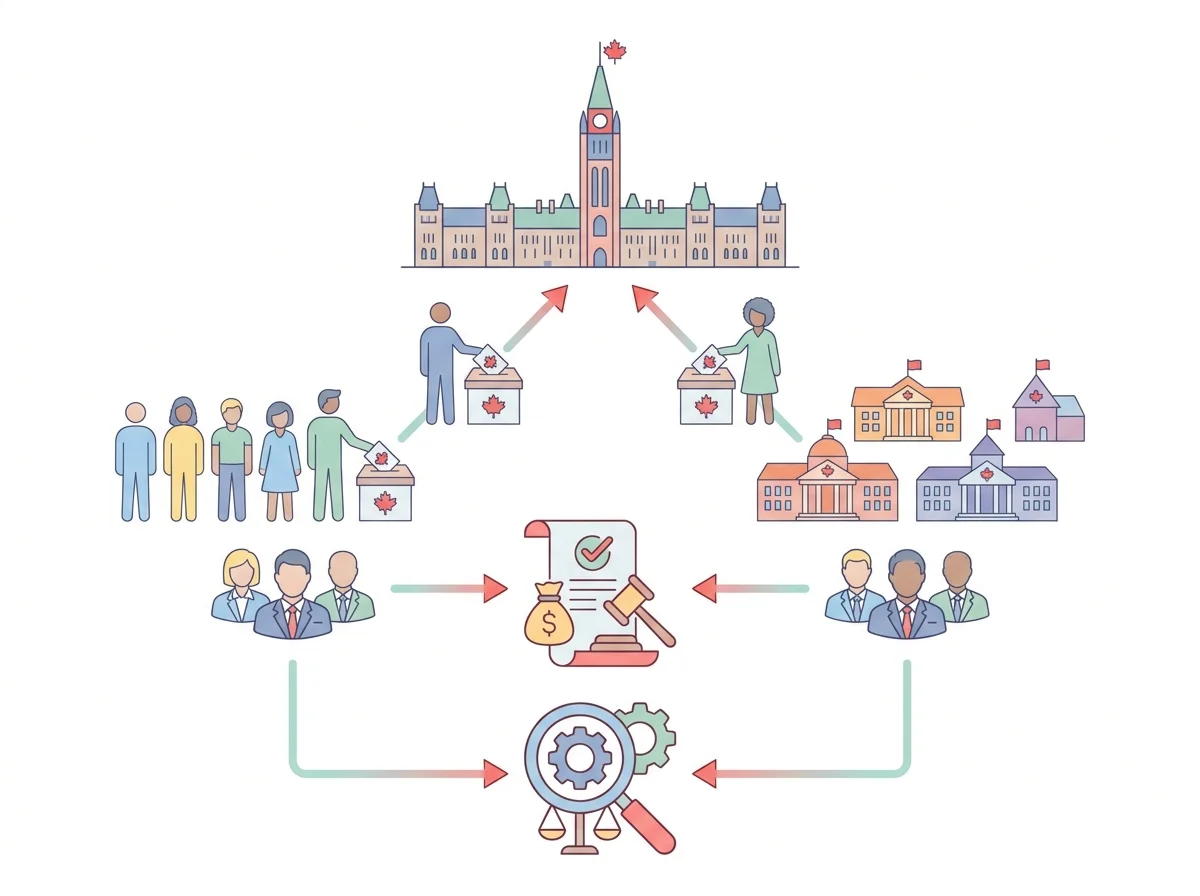
Cabinet ministers answer to the elected members. They must keep what is called the "confidence of the House". In plain words, a majority of elected members has to keep supporting the government. If the government is beaten in a non-confidence vote, the ministers must resign. This rule matters because ministers are not elected to their posts as ministers; the House is. A government therefore cannot ignore the elected chamber and simply carry on governing.
Key Facts
- Ministers must keep the "confidence of the House"
- Defeat in a non-confidence vote forces ministers to resign
- Cabinet ministers answer to elected representatives
Test yourself on this topic
5 practice questions from “Parliamentary Democracy”, each with the answer explained.
- In Canada's parliamentary democracy, whom do the people elect?
- What are elected representatives responsible for?
- To whom are Cabinet ministers responsible?
- What must the Cabinet keep in order to stay in office?
- What must Cabinet ministers do if they lose a non-confidence vote?
Advertisement