
🗳️ Chapter 6: Federal Elections
6.4.1 Other Levels of Government in Canada
3 paragraphs · 4 questions
Local government, also called municipal government, plays a big part in daily life. A municipality is normally run by a council. The council passes rules known as by-laws, and those by-laws apply only inside that local community. At the head of the council sits a mayor, or in some places a reeve. Beside them sit councillors, who in certain municipalities are called aldermen instead.
Key Facts
- Municipal councils pass laws called by-laws
- By-laws affect only the local community
- The head of council is a mayor or a reeve
- Council members are councillors or aldermen
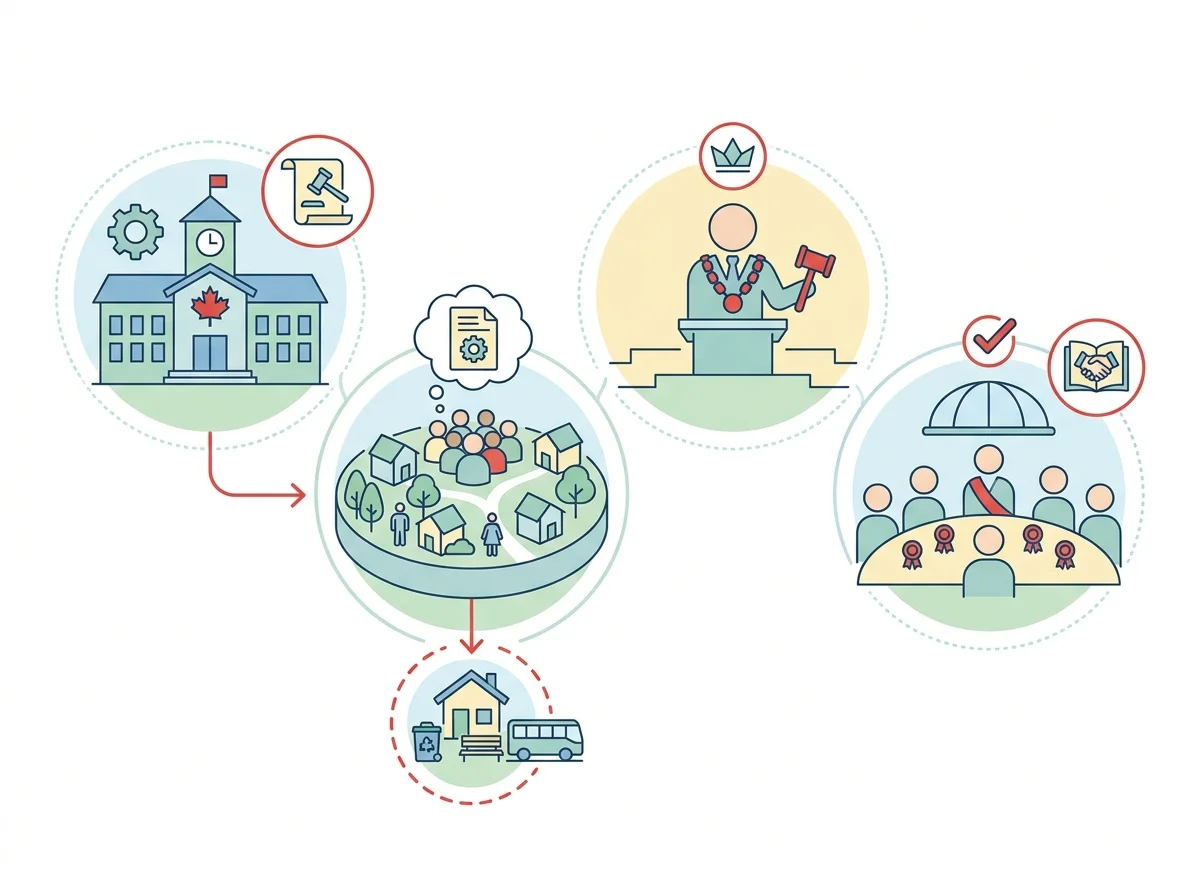
Municipalities look after many everyday services. Typical duties include planning for towns and regions, keeping up streets and roads, and collecting rubbish. They clear snow in winter and run firefighting services. Ambulances and other emergency services are theirs too. So are recreation facilities and public transit, plus certain health and social services provided locally. In most large urban centres the police force is a municipal one.
Key Facts
- Municipalities handle planning, roads and rubbish collection
- Snow clearing, fire, ambulance and emergency services are local
- Recreation facilities and public transit are municipal
- Most major cities have municipal police forces
Federal elections are not the only ones open to you. Provinces, territories and municipalities hold their own elections, and these are also held by secret ballot. The rules, though, are not the same as the federal rules. Details such as who may vote and how you get registered can differ from one place to another. Find out the rules that apply where you live, so that you can use your right to vote at every level.
Key Facts
- Provincial, territorial and municipal elections use a secret ballot
- Their rules differ from federal election rules
- Learn local rules so you can exercise your right to vote
Test yourself on this topic
4 practice questions from “Other Levels of Government in Canada”, each with the answer explained.
- What are the laws made by a municipal council called?
- Who normally sits on a municipal council?
- Which of these is a municipal responsibility?
- How do provincial, territorial and municipal elections compare with federal ones?
Advertisement