
👨⚖️ Chapter 7: The Justice System
7.1.1 The Justice System
2 paragraphs · 4 questions
Every person in Canada is promised due process under the law. In criminal matters, the starting point is that an accused person is innocent. Guilt has to be proven; it is never assumed. This is called the presumption of innocence, and it protects anyone who has been charged with a crime. Because of it, the burden falls on the state to show that a person broke the law. Until that proof is accepted, the person is treated as innocent. This rule is one of the foundations of how criminal cases are handled in Canada.
Key Facts
- Everyone in Canada is guaranteed due process under the law
- Criminal matters begin from the presumption of innocence
- A person is innocent until proven guilty
- The state must prove guilt; it is never assumed
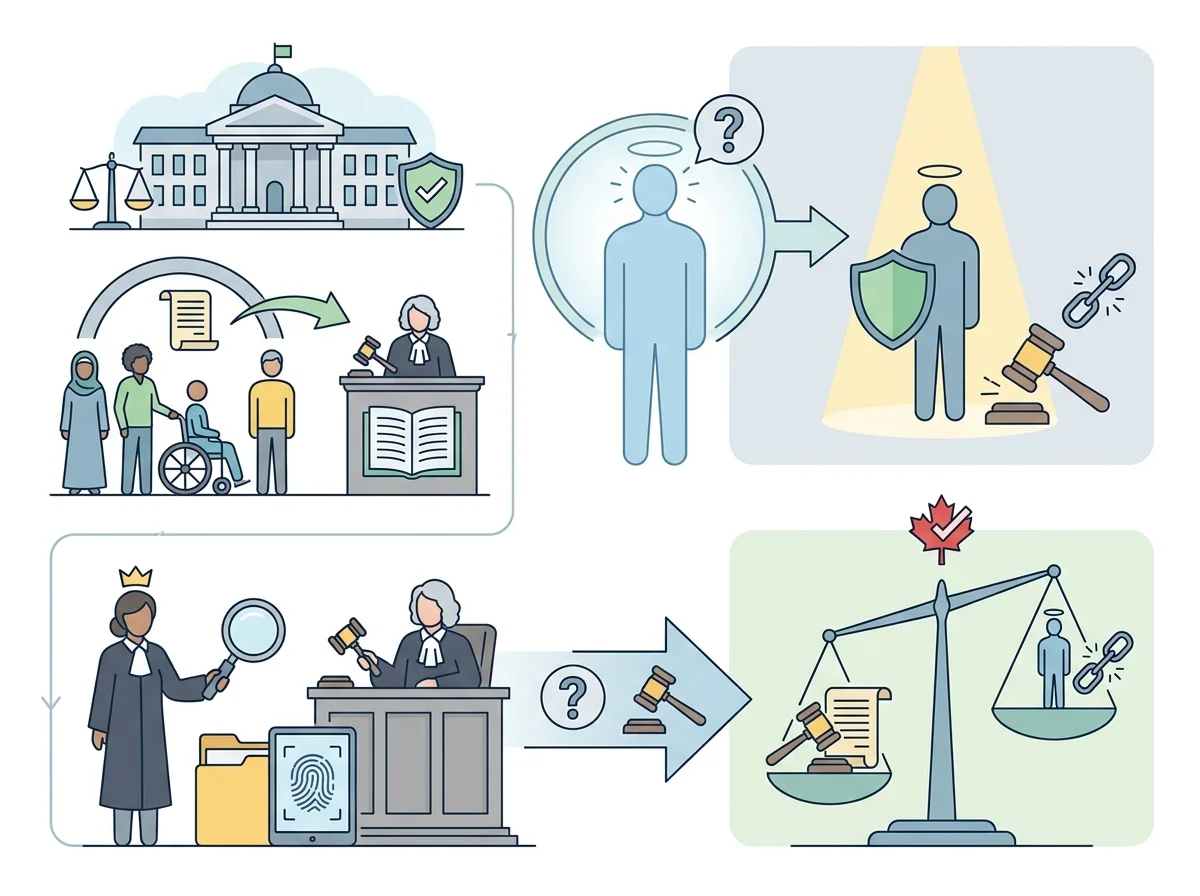
Canadian law grew out of a long inherited tradition. Four ideas sit at its centre: due process, the rule of law, democratic principles, and freedom under the law. Due process has a precise meaning. It means the government must respect every legal right that a person holds under the law. Officials cannot skip steps or ignore someone's rights just because a case looks obvious to them. These four ideas are not decoration. They set real limits on what the state may do to an individual, and they shape how courts, police and governments are expected to behave.
Key Facts
- Foundations: due process, rule of law, democratic principles, freedom under law
- Due process = government must respect a person's legal rights
- These principles limit what the state may do to an individual
Test yourself on this topic
4 practice questions from “The Justice System”, each with the answer explained.
- What does Canada's justice system guarantee to everyone?
- In a Canadian criminal case, what does the presumption of innocence mean?
- What does the term "due process" mean?
- Canada's legal system grew from a heritage that includes which of these?
Advertisement