
🐦 Chapter 8: Canadian Symbols
8.2.2 The Fleur-de-lys
2 paragraphs · 2 questions
The fleur-de-lys is a stylised lily flower. The story is that a king of France took it as his emblem in the year 496. From then on it was the mark of French royalty for more than a thousand years. It travelled with the French to North America and was used in the colony of New France. That is why the flower still stands for the French roots of Canada rather than for one province alone.
Key Facts
- Fleur-de-lys means lily flower in French
- A French king is said to have adopted it in 496
- It marked French royalty for over a thousand years
- It was used in the colony of New France
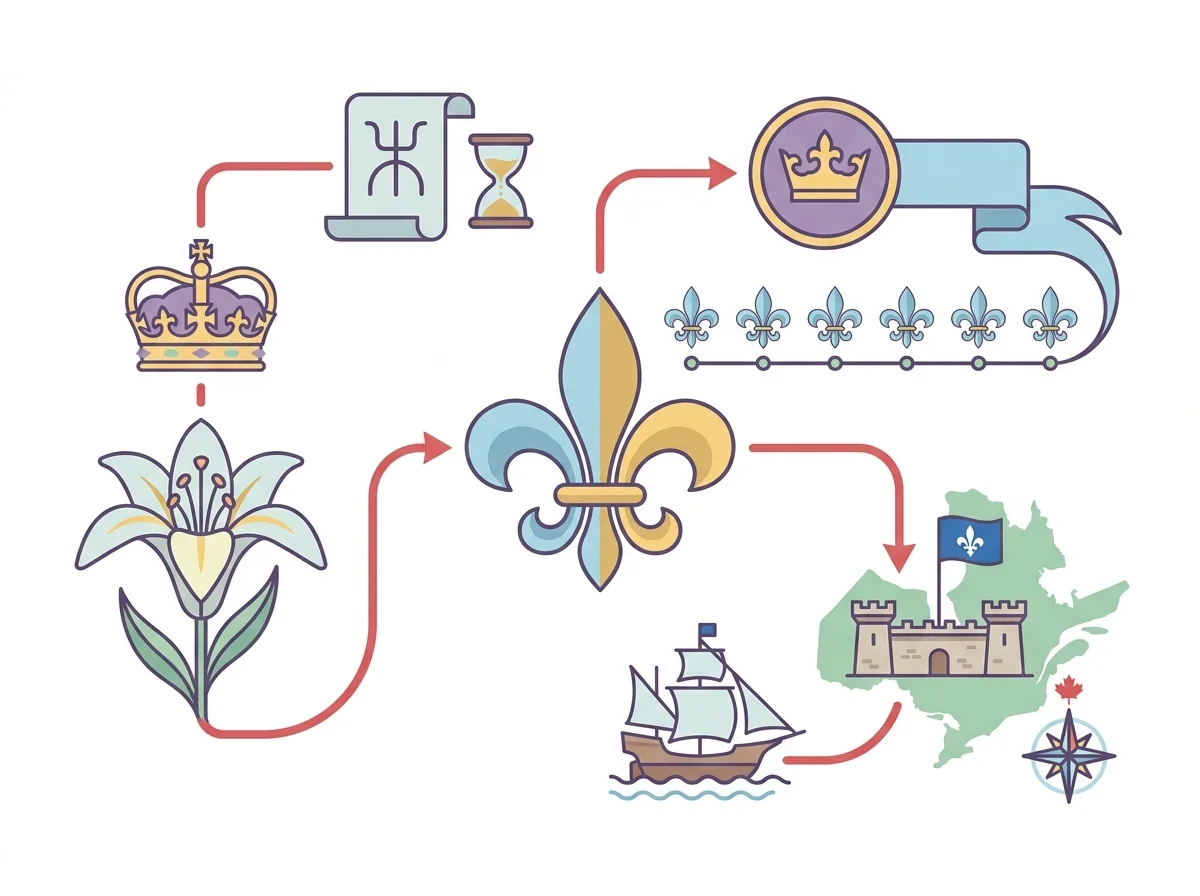
The emblem came back into official use at the time of Confederation. It was placed on the Canadian Red Ensign together with the other national symbols. Quebec then made it the centre of its own identity. In 1948 the province adopted a flag of its own, and that design is built on the Cross and on four fleurs-de-lys. Today the flower is closely tied to Quebec, but it began as a symbol of France and of French Canada as a whole.
Key Facts
- The fleur-de-lys was revived at Confederation
- It was included on the Canadian Red Ensign
- Quebec adopted its own flag in 1948
- The Quebec flag is based on the Cross and the fleur-de-lys
Test yourself on this topic
2 practice questions from “The Fleur-de-lys”, each with the answer explained.
- In what year is the lily flower said to have been adopted by the king of France?
- In what year did Quebec adopt its own provincial flag?
Advertisement