
🗺️ Chapter 10: Canada's Regions
10.4.4 Alberta
2 paragraphs · 5 questions
No other Prairie province has as many people as Alberta. Its name comes from Princess Louise Caroline Alberta, who was the fourth daughter of Queen Victoria, and Lake Louise, the famous lake in the Rocky Mountains, is named for her as well. Alberta holds five national parks. Banff National Park, one of them, dates from 1885. Rough, broken country called the Badlands holds some of the world's richest beds of dinosaur finds and prehistoric fossils.
Key Facts
- The Prairie province with the largest population
- Named after Princess Louise Caroline Alberta, Queen Victoria's 4th daughter
- Five national parks; Banff National Park dates from 1885
- The Badlands hold world-class dinosaur fossils
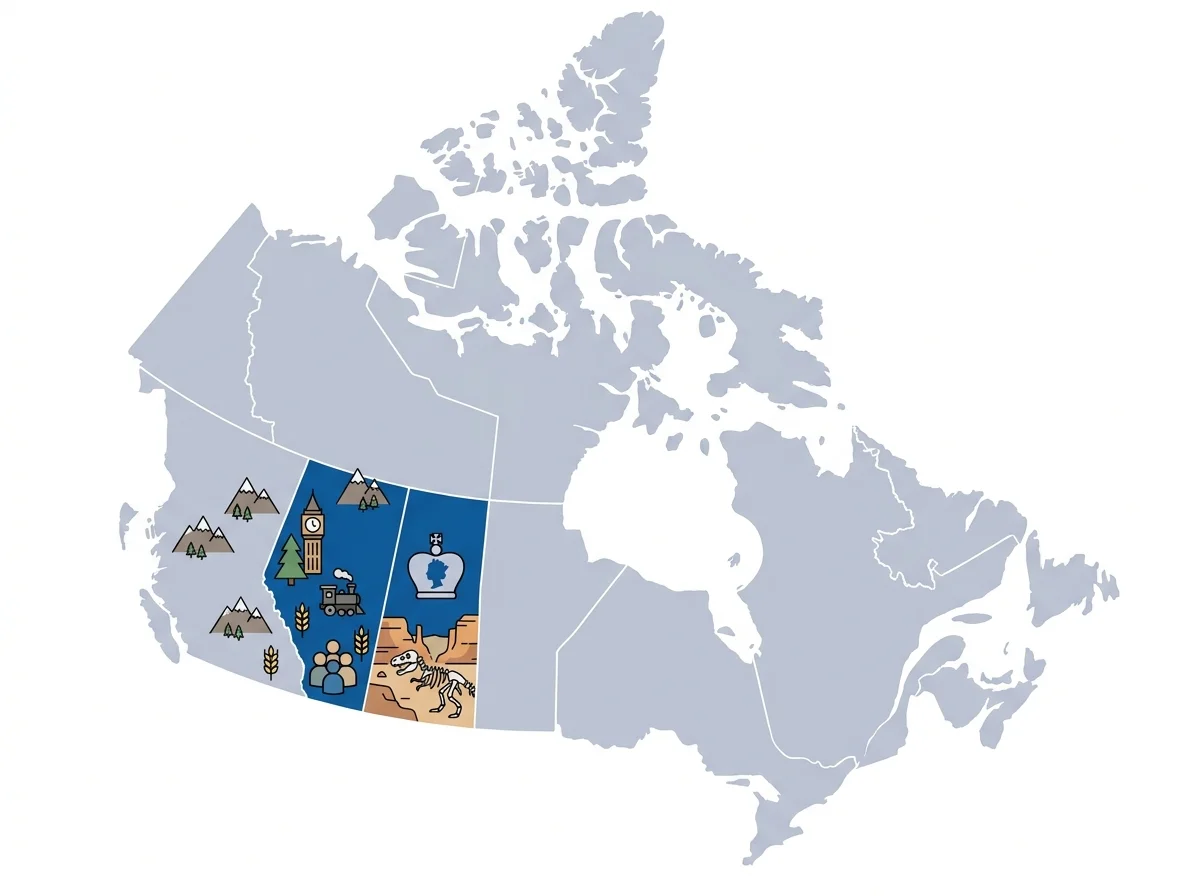
For oil and gas, Alberta leads every other province. Up in the north, work is under way to develop the oil sands into a major energy source. Farming counts here too. The province is famous for its huge cattle ranches, and thanks to those herds Canada ranks among the world's biggest producers of beef. So two great engines drive Alberta: energy below the ground, and cattle grazing above it.
Key Facts
- Alberta leads Canada in oil and gas output
- The northern oil sands are a growing energy source
- Huge cattle ranches help make Canada a major beef producer
Test yourself on this topic
5 practice questions from “Alberta”, each with the answer explained.
- Which is the most populous Prairie province?
- Alberta and Lake Louise were both named after whom?
- In which year was Banff National Park established?
- Which province is Canada's largest producer of oil and gas?
- What are Alberta's rugged Badlands known for?
Advertisement