
🗺️ Chapter 10: Canada's Regions
10.5.2 British Columbia
2 paragraphs · 4 questions
British Columbia, or B.C., sits on the Pacific coast and is the westernmost province. Its population was four million in the 2012 figures. The Port of Vancouver is Canada's doorway to the Asia-Pacific. About half of everything the province produces comes from its forests: lumber, newsprint, and pulp and paper. No forestry industry in Canada is worth more. B.C. also mines and fishes, and it grows fruit in the Okanagan Valley, where the wine industry is based.
Key Facts
- Canada's westernmost province; 4 million people in 2012 figures
- Vancouver is the gateway to the Asia-Pacific
- About half of B.C.'s goods are forestry products
- Okanagan Valley: fruit orchards and the wine industry
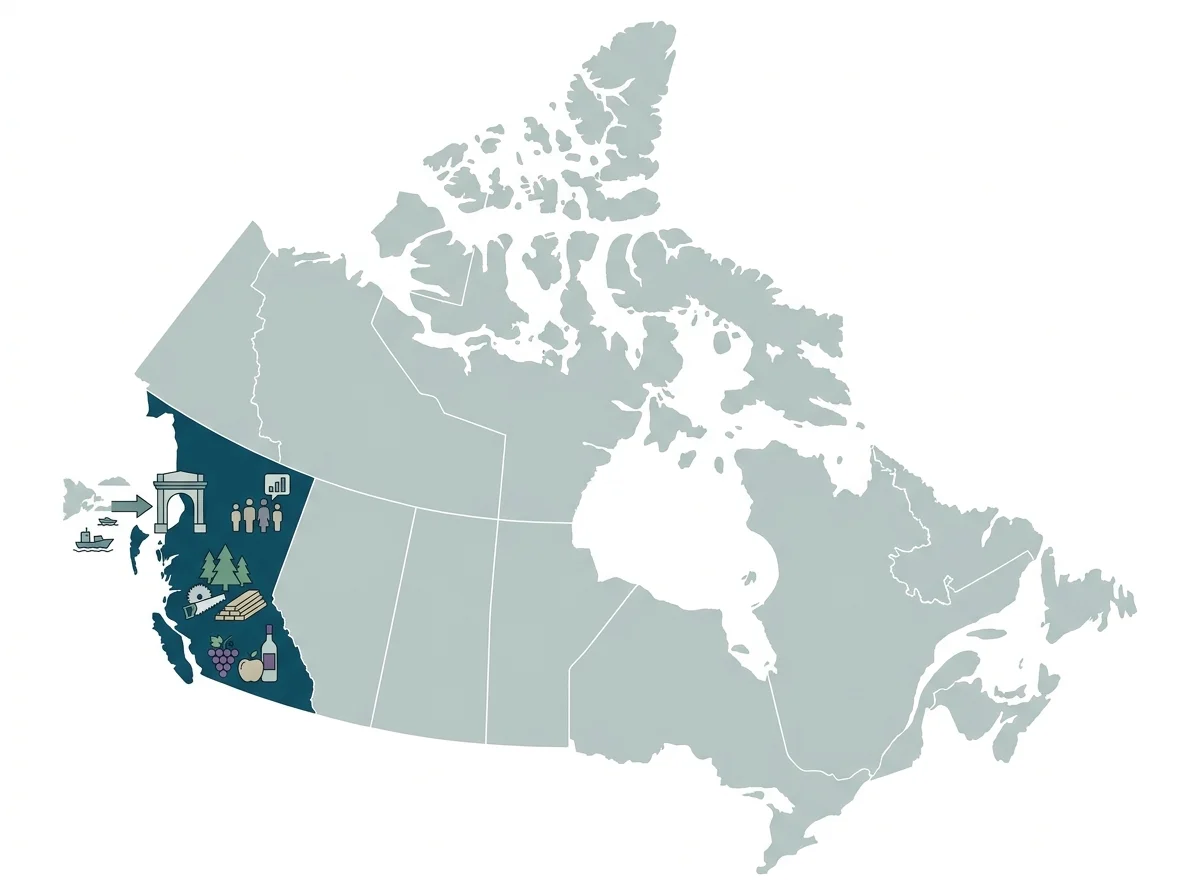
B.C. has the most extensive park system of any province, with roughly 600 provincial parks. Its cities have large Asian communities, and after English the languages heard most often there are Chinese and Punjabi. Victoria is the capital. Tourists come to visit it, and it is also the headquarters of the navy's Pacific fleet. Note the difference carefully: Vancouver is the great port, but Victoria is the capital city.
Key Facts
- About 600 provincial parks, the largest park system in Canada
- After English, Chinese and Punjabi are most spoken in the cities
- Victoria is the capital and headquarters of the Pacific naval fleet
Test yourself on this topic
4 practice questions from “British Columbia”, each with the answer explained.
- Which is Canada's westernmost province?
- In British Columbia's cities, which two languages rank just behind English?
- About what share of the goods produced in British Columbia are forestry products?
- Which city is B.C.'s capital and home to the navy's Pacific fleet headquarters?
Advertisement