
🍁 Chapter 2: Who We Are
2.3.1 English and French
2 paragraphs · 7 questions
Canadian society today grew mainly out of two Christian civilizations that settlers carried across the Atlantic from Europe: one English-speaking, one French-speaking. English and French shape ordinary daily life for most people here, and both are official languages of the country. The law obliges the federal government to offer its services in both of them, anywhere in Canada. That legal duty is one of the clearest signs of how the two language communities sit at the base of the nation.
Key Facts
- English and French are Canada's official languages
- Society grew from English- and French-speaking Christian civilizations
- Federal services must be offered in both languages across Canada
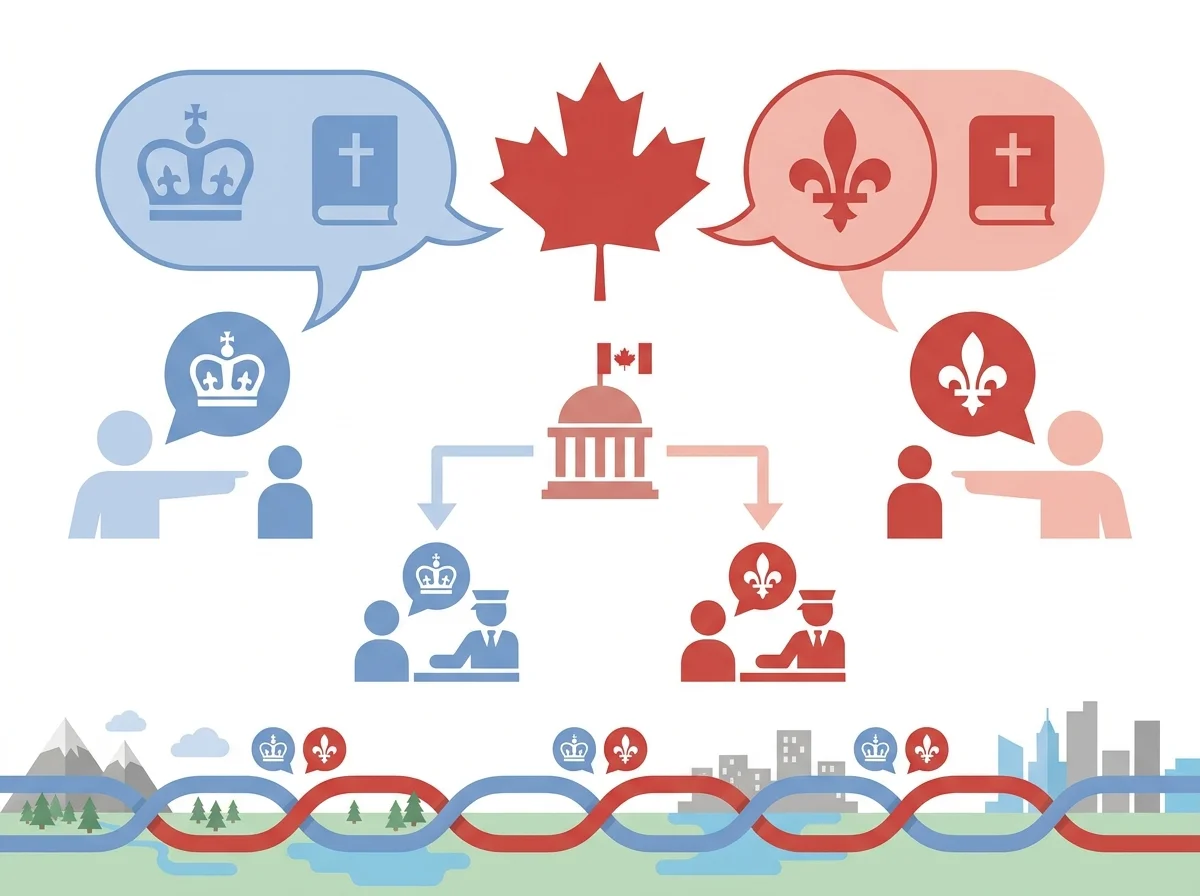
A person whose first language is English is called an Anglophone; a person whose first language is French is a Francophone. As of 2012, about 18 million people in Canada were Anglophones and around 7 million were Francophones. Most Francophones live in the province of Quebec. About one million more live in Ontario, New Brunswick and Manitoba, with smaller numbers in other provinces. New Brunswick holds a special place among the provinces: it is the only one that is officially bilingual.
Key Facts
- Anglophone = English first language; Francophone = French first language
- About 18 million Anglophones, 7 million Francophones (2012 figures)
- One million Francophones in Ontario, New Brunswick and Manitoba
- Only one province is officially bilingual: New Brunswick
Test yourself on this topic
7 practice questions from “English and French”, each with the answer explained.
- What are Canada's official languages?
- What language duty does the law place on the federal government?
- How many Anglophones live in Canada?
- How many Francophones live in Canada?
- What is a Francophone?
- Beyond Quebec, a million French speakers are concentrated in which three provinces?
- Which Canadian province is officially bilingual?
Advertisement