
🍁 Chapter 2: Who We Are
2.3.3 Quebecers
2 paragraphs · 3 questions
Quebecers are the people of the province of Quebec, and the great majority of them speak French. Most descend from 8,500 French settlers who arrived during the 1600s and 1700s. From that small beginning grew a people with a clear identity, culture and language of their own. In 2006 the House of Commons recognised the Québécois as a nation inside a united Canada. That vote acknowledged their distinct place within the country, not a separate state.
Key Facts
- Most Quebecers descend from 8,500 French settlers of the 1600s–1700s
- The vast majority of Quebecers speak French
- In 2006 the House of Commons called the Québécois a nation within Canada
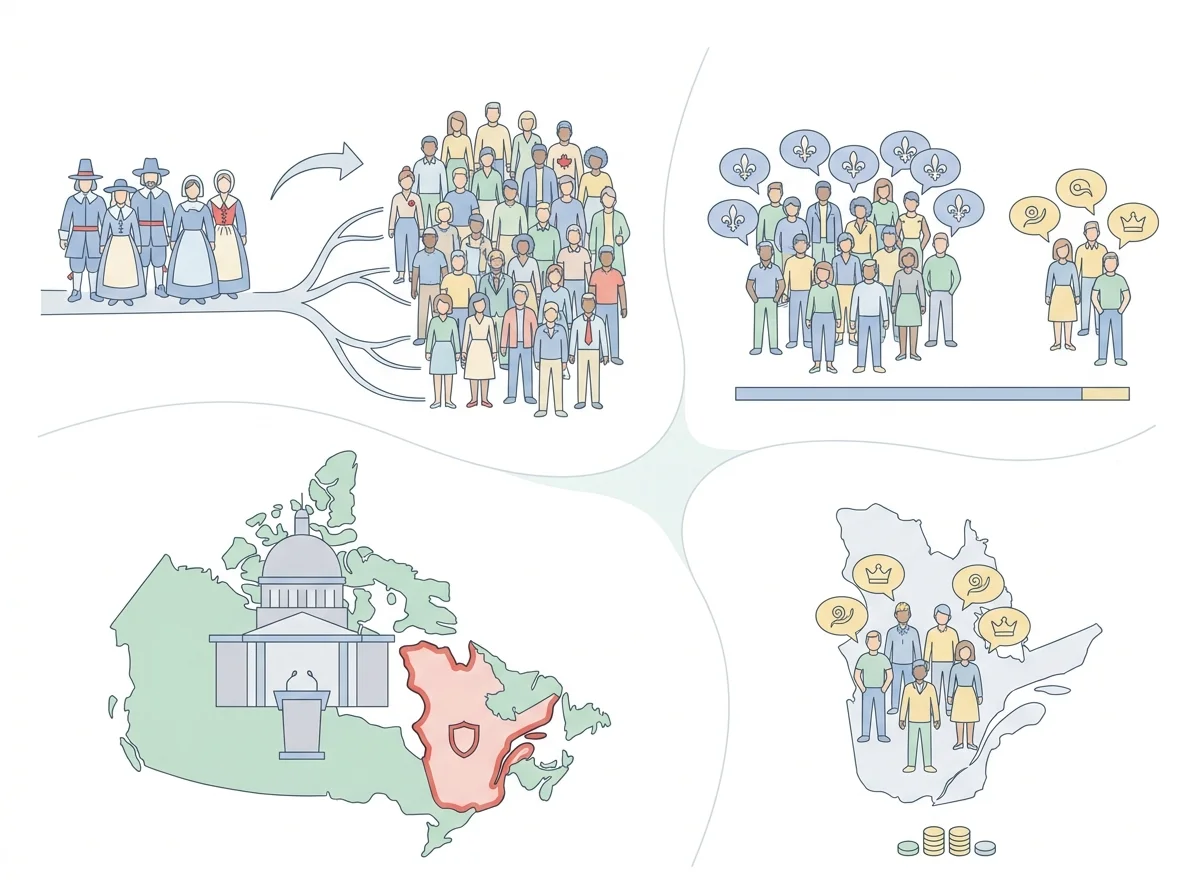
Quebec is not only French-speaking. Around one million Anglo-Quebecers lived in the province as of 2012, and their presence there goes back roughly 250 years. They are a lively and long-established part of life in Quebec. So the province holds two language communities side by side: a French-speaking majority and an English-speaking minority with deep local roots of its own.
Key Facts
- About one million Anglo-Quebecers (2012 figures)
- Their heritage in Quebec goes back some 250 years
- A vibrant, long-established English-speaking community in Quebec
Test yourself on this topic
3 practice questions from “Quebecers”, each with the answer explained.
- Most Quebecers descend from how many French settlers of the 1600s and 1700s?
- What did the House of Commons recognize in 2006?
- How long a heritage do Canada's one million Anglo-Quebecers have?
Advertisement