
🏛️ Chapter 3: Canada's History
3.1.1 Aboriginal Peoples
2 paragraphs · 5 questions
When Europeans explored Canada, every region was already lived in. They called the people "Indians" because the first explorers believed they had arrived in the East Indies. Ways of life differed from place to place. The Huron-Wendat around the Great Lakes, like the Iroquois, both farmed and hunted. The Cree and Dene of the Northwest hunted and gathered their food. The Sioux moved from place to place, following the bison, or buffalo, herds. The Inuit lived off Arctic wildlife. On the West Coast, people dried and smoked fish to keep it. Groups often fought each other for land, resources and prestige.
Key Facts
- Explorers said "Indians" — they thought they had reached the East Indies
- Huron-Wendat and Iroquois farmed and hunted near the Great Lakes
- Sioux followed the bison herds; Inuit lived off Arctic wildlife
- West Coast peoples preserved fish by drying and smoking it
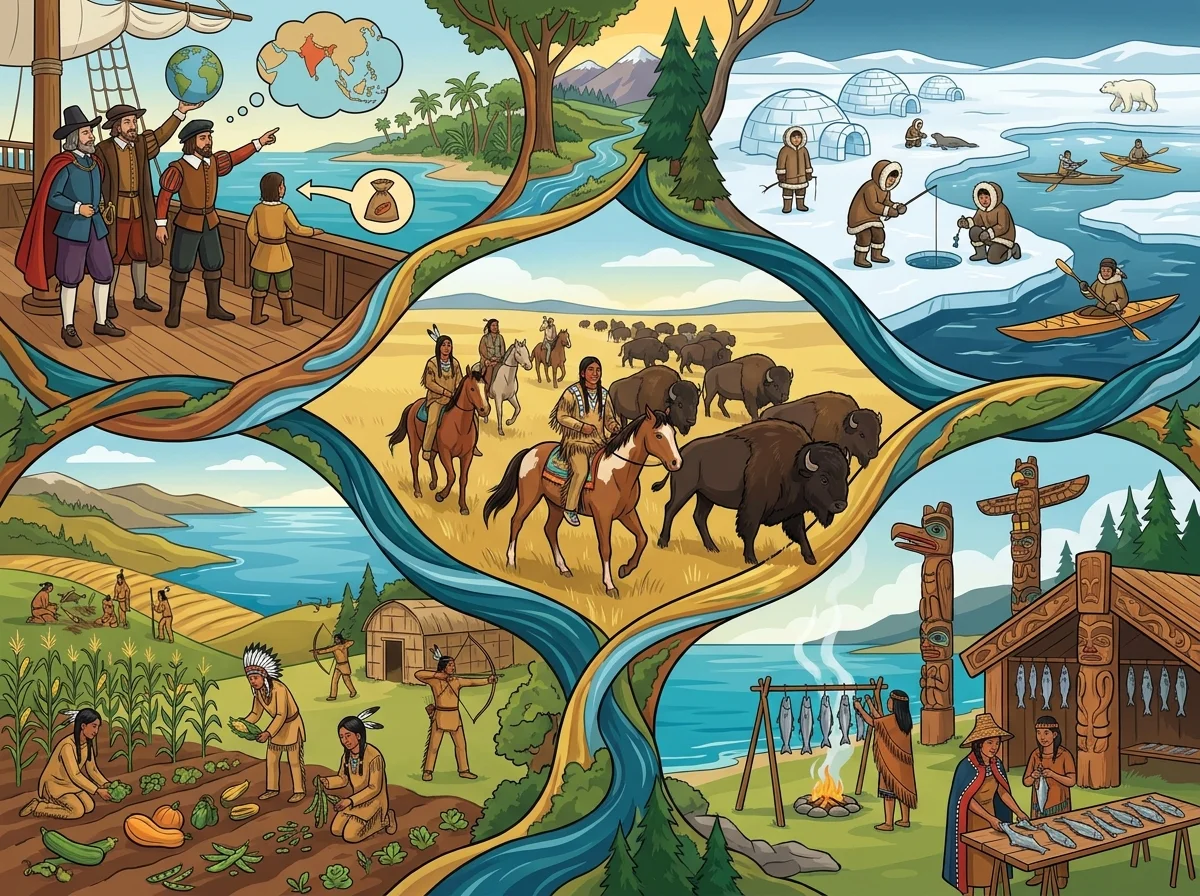
Then came European traders, missionaries, soldiers and colonists. Their arrival changed native life forever. Huge numbers of Aboriginal people died of European diseases, because their bodies had no protection against them. Even so, the two peoples did not only fight. Over the first 200 years of living side by side, Aboriginal people and Europeans built close trading links, religious links and military alliances. Those bonds became the base on which Canada was later built.
Key Facts
- Traders, missionaries, soldiers and colonists changed native life permanently
- Many Aboriginal people died of European diseases they had no immunity to
- First 200 years of contact created economic, religious and military bonds
- Those bonds laid the foundations of Canada
Test yourself on this topic
5 practice questions from “Aboriginal Peoples”, each with the answer explained.
- Why did the first European explorers call Canada's native peoples "Indians"?
- Which people of the Great Lakes region lived by both farming and hunting?
- Which Aboriginal people were nomadic, moving with the bison herds?
- What killed very large numbers of Aboriginal people after Europeans arrived?
- What did Aboriginal peoples and Europeans build in their first 200 years of contact?
Advertisement