
🏛️ Chapter 3: Canada's History
3.1.2 The First Europeans
2 paragraphs · 4 questions
About a thousand years ago, Vikings from Iceland settled Greenland. From there they sailed further west and reached Labrador and the island of Newfoundland. They were the first Europeans to arrive. What is left of their settlement is called l'Anse aux Meadows, and today it is a World Heritage site. After the Vikings, centuries passed with little contact. Serious European exploration only began again in 1497, with the voyage of John Cabot.
Key Facts
- Vikings from Iceland colonized Greenland about 1,000 years ago
- They also reached Labrador and the island of Newfoundland
- Their settlement l'Anse aux Meadows is a World Heritage site
- Real European exploration began in 1497 with John Cabot
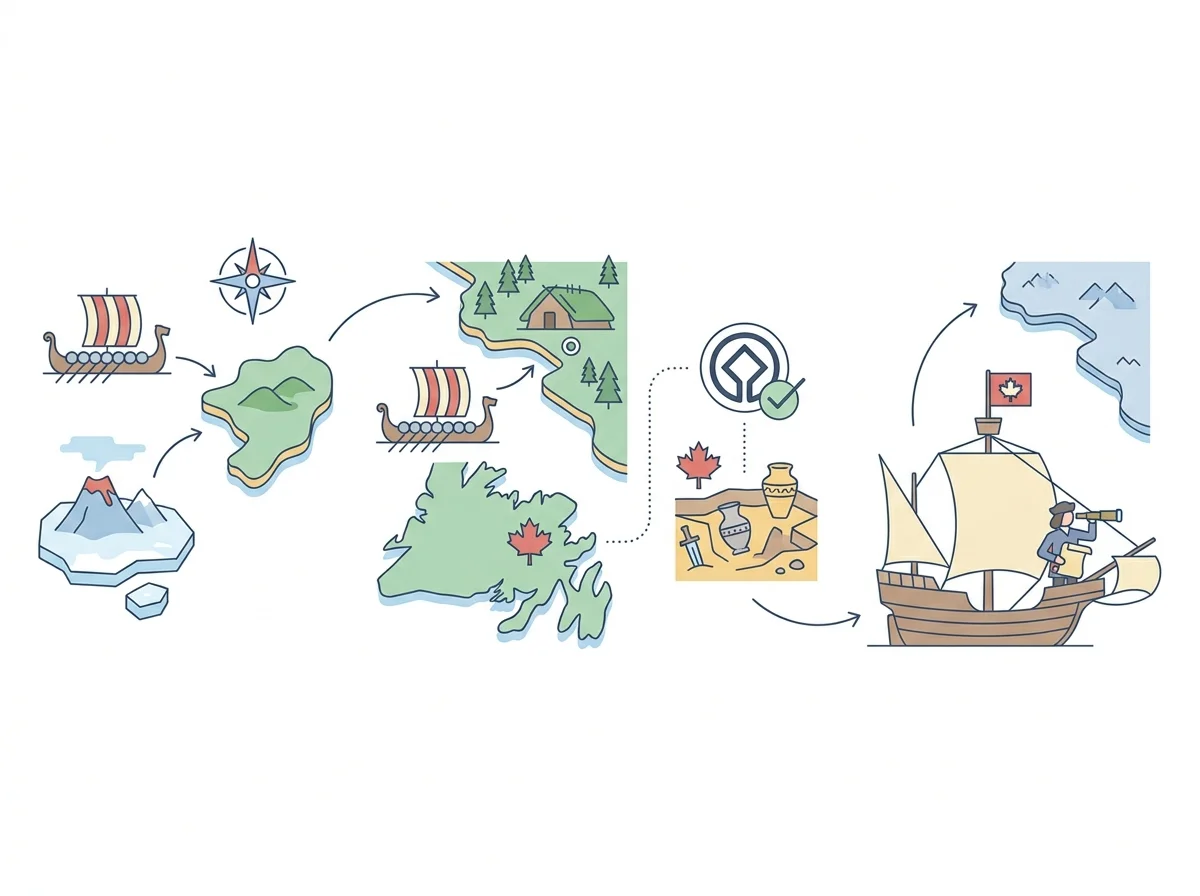
John Cabot was an Italian who had moved to England. In 1497 he stepped ashore on either Newfoundland or Cape Breton Island. He claimed the New Founde Land for England. Cabot was also the first person to draw a map of Canada's East Coast, the Atlantic shore. His voyage is treated as the true start of European exploration here. English people did not begin settling in the area, however, until 1610.
Key Facts
- John Cabot: an Italian immigrant to England
- Landed 1497 on Newfoundland or Cape Breton Island
- First to map Canada's Atlantic coast; claimed New Founde Land for England
- English settlement did not start until 1610
Test yourself on this topic
4 practice questions from “The First Europeans”, each with the answer explained.
- Which Europeans reached Labrador and Newfoundland about 1,000 years ago?
- What is l'Anse aux Meadows?
- English settlement of the New Founde Land did not begin until which year?
- Which explorer first charted Canada's Atlantic coastline?
Advertisement