
🏛️ Chapter 3: Canada's History
3.1.6 Struggle for a Continent
2 paragraphs · 4 questions
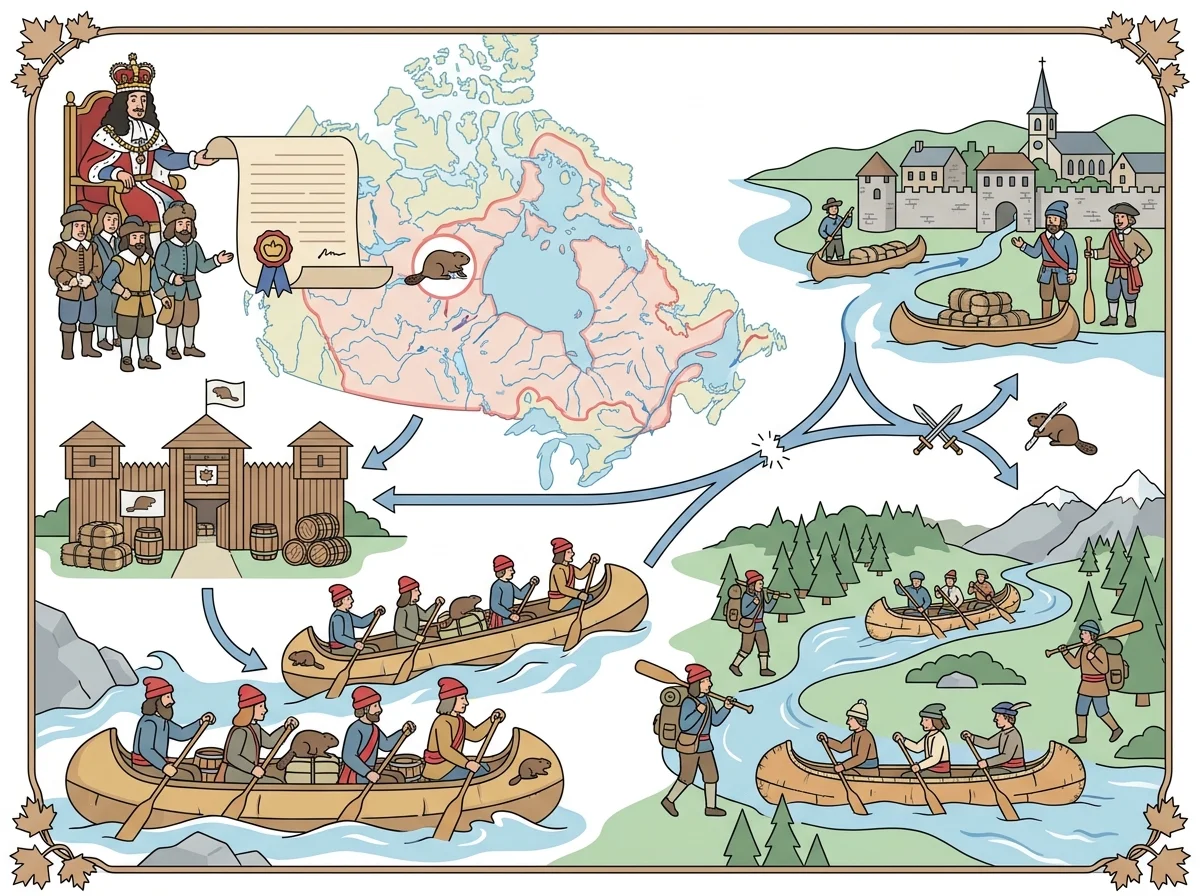
In 1670 King Charles II of England gave the Hudson's Bay Company the sole right to trade across all the land that drains into Hudson Bay. For the next hundred years the Company competed with traders based in Montreal. The men who carried goods by canoe were known as voyageurs and coureurs des bois. They were tough and skilled, and they built strong alliances with First Nations.
Key Facts
- 1670: Charles II grants the Hudson's Bay Company its trading charter
- The grant covered the whole watershed draining into Hudson Bay
- HBC competed with Montreal-based traders for about 100 years
- Canoe men were called voyageurs and coureurs des bois
Along the Atlantic seaboard, English colonies had started in the early 1600s. Over time these colonies became wealthier, and their population passed that of New France. Then came a long fight: through the 1700s, Great Britain and France each wanted North America. The question was settled at Québec City in 1759. There, on the Plains of Abraham, the British beat the French, and France's empire in America came to an end. Two commanders led their troops into that battle, and both were killed: the Marquis de Montcalm and Brigadier James Wolfe.
Key Facts
- English seaboard colonies grew richer and larger than New France
- 1759: British victory on the Plains of Abraham, Québec City
- The battle ended France's empire in America
- Both commanders died: the Marquis de Montcalm and James Wolfe
Test yourself on this topic
4 practice questions from “Struggle for a Continent”, each with the answer explained.
- Who granted the Hudson's Bay Company exclusive trading rights in 1670?
- What were the fur traders who travelled by canoe called?
- Which two commanders were killed leading their troops at Quebec City in 1759?
- Which battle in 1759 marked the end of France's empire in America?
Advertisement