
🏛️ Chapter 3: Canada's History
3.3.1 The War of 1812: The Fight for Canada
4 paragraphs · 7 questions
At the Battle of Trafalgar in 1805, Napoleon Bonaparte lost his fleet. From then on Britain controlled the seas. Canada was part of the British Empire, and that empire was resisting Bonaparte's attempt to rule all of Europe. Britain therefore interfered with American shipping, which made Americans resentful. Conquering Canada looked easy to the United States, so in June 1812 it sent an invasion force north. That judgement was wrong.
Key Facts
- 1805: Napoleon's fleet defeated at the Battle of Trafalgar
- Interference with their shipping angered Americans
- June 1812: the United States invades Canada
- The Americans expected an easy conquest
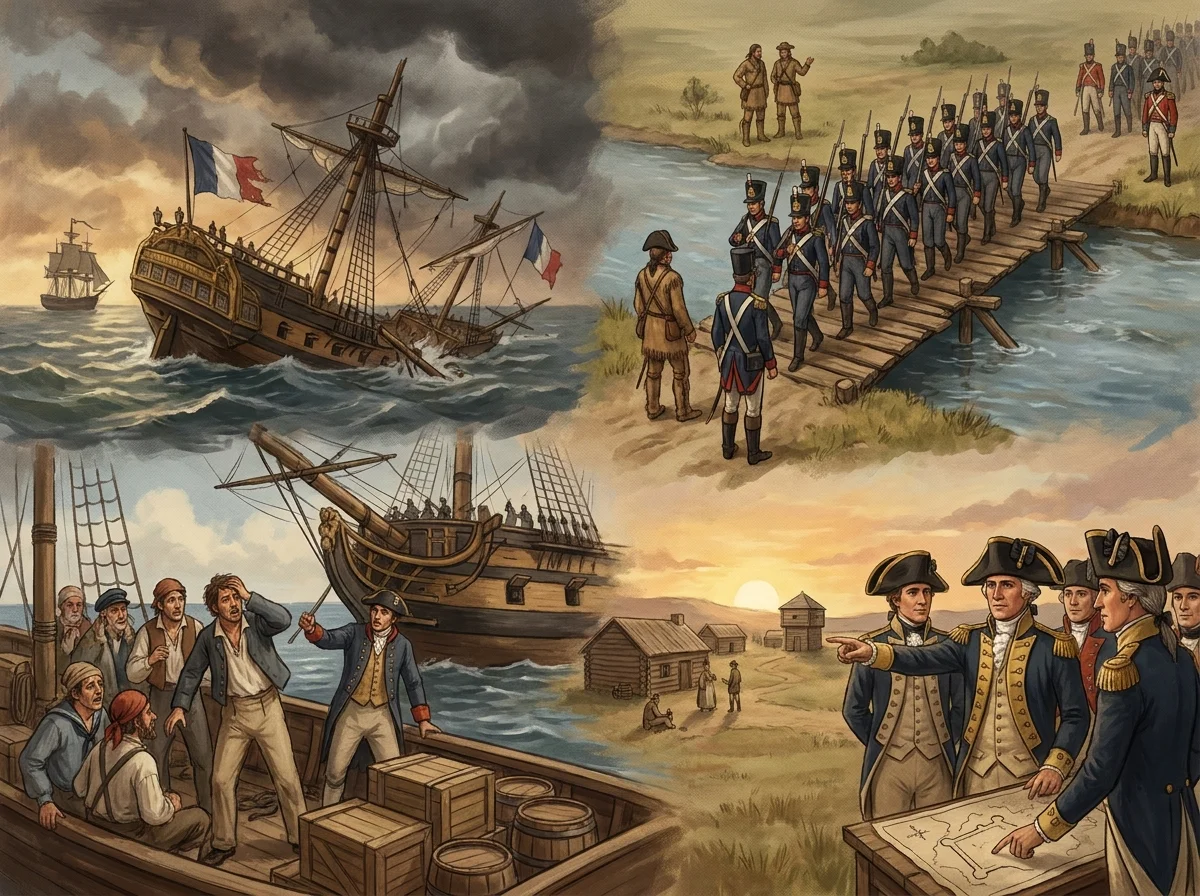
Britain's soldiers did not defend Canada alone. Canadian volunteers stood with them, and so did First Nations, among them Shawnee warriors under Chief Tecumseh. Detroit fell in July to Major-General Sir Isaac Brock. Brock died later at Queenston Heights, close to Niagara Falls, holding off an attack by the Americans; they lost that battle. In 1813 the Americans were beaten again. At Châteauguay, south of Montreal, Lieutenant-Colonel Charles de Salaberry stopped 4,000 invaders from the United States with only 460 soldiers, most of them French Canadiens.
Key Facts
- Chief Tecumseh led Shawnee warriors alongside British troops
- Brock captured Detroit, then died at Queenston Heights
- De Salaberry held off 4,000 Americans at Châteauguay with 460 men
- Most of de Salaberry's soldiers were French Canadiens
The Parliament Buildings and Government House in York - the town now called Toronto - were burned by American forces in 1813. Britain struck back a year later. In 1814 an expedition sailed from Nova Scotia under Major-General Robert Ross. His men burned down the White House in Washington, D.C., together with other public buildings there. Ross himself was killed in battle soon afterwards. Halifax is where he was buried, and he was given full military honours.
Key Facts
- 1813: Americans burn Government House and Parliament in York (Toronto)
- 1814: Robert Ross leads an expedition from Nova Scotia
- His force burned the White House and other Washington buildings
- Ross died soon after and received a full military burial in Halifax
The American plan to conquer Canada had collapsed by 1814. Britain then paid for a costly defence system in the colony. Halifax and Quebec City each received a Citadel. Halifax also gained a naval drydock, while Kingston gained Fort Henry. All of those places are busy historic sites now. Where the Canada-U.S.A. border sits today comes partly out of the War of 1812. The biggest result of all was this: Canada stayed independent from the United States.
Key Facts
- The American plan to conquer Canada collapsed by 1814
- Britain paid for Citadels at Halifax and Quebec City
- Halifax gained a naval drydock; Kingston gained Fort Henry
- The war left Canada independent from the United States
Test yourself on this topic
7 practice questions from “The War of 1812: The Fight for Canada”, each with the answer explained.
- In which month and year did the United States launch its invasion of Canada in the War of 1812?
- Which First Nations leader brought Shawnee warriors to help defend Canada?
- Which place did Major-General Sir Isaac Brock capture in July 1812?
- Where was Sir Isaac Brock killed?
- At Chateauguay in 1813, how many soldiers did Charles de Salaberry lead against 4,000 Americans?
- Which British commander burned Washington's White House in 1814?
- What lasting result did the War of 1812 have for Canada?
Advertisement