
🏛️ Chapter 3: Canada's History
3.3.2 Heroes and Landmarks of the War of 1812
2 paragraphs · 1 questions
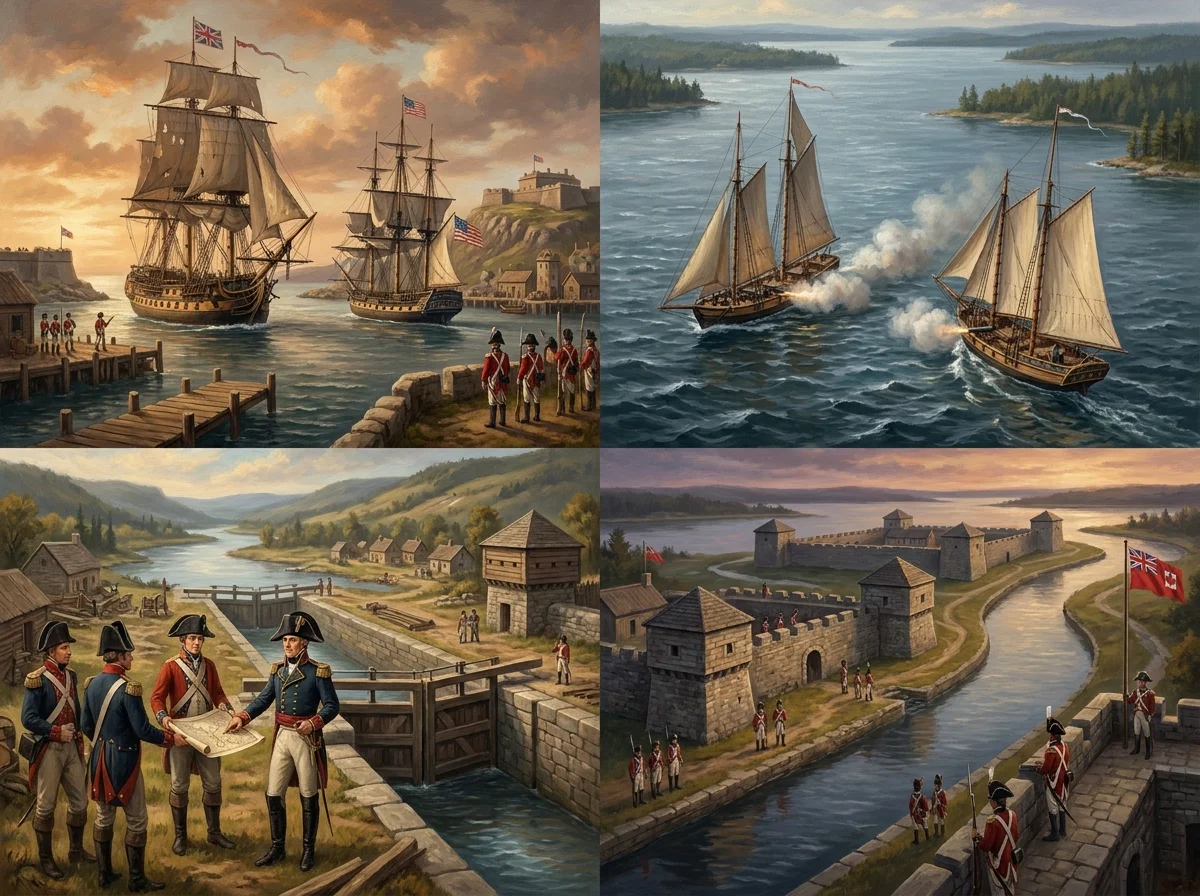
At sea the war went on as well, and the Great Lakes had naval battles of their own. In 1813 the Royal Navy frigate HMS Shannon led a captured American warship, USS Chesapeake, into the harbour at Halifax. Canada's defence in 1814 was strengthened by the Duke of Wellington, who sent over some of his finest troops. He also chose Bytown, now Ottawa, as the far end of the Rideau Canal. That canal was one link in a chain of forts meant to keep American armies out. Wellington beat Napoleon in 1815, so the victor over Napoleon also helped found the national capital.
Key Facts
- 1813: HMS Shannon brings a captured American ship, USS Chesapeake, into Halifax
- Naval battles were fought on the Great Lakes too
- Wellington picked Bytown (Ottawa) as the Rideau Canal endpoint
- The canal belonged to a chain of forts guarding against U.S. invasion
Laura Secord was a pioneer wife and the mother of five children. In 1813 she made a dangerous journey on foot of 19 miles, or 30 km, to warn Lieutenant James FitzGibbon that the Americans were planning an attack. Her bravery helped win the Battle of Beaver Dams. She is still recognised as a heroine today. Together, British troops, First Nations and Canadian volunteers defeated the American invasion of 1812–14.
Key Facts
- Laura Secord walked 19 miles (30 km) to warn of an American attack
- She warned Lieutenant James FitzGibbon
- Her courage helped win the Battle of Beaver Dams
- British troops, First Nations and Canadian volunteers beat the invasion
Test yourself on this topic
1 practice questions from “Heroes and Landmarks of the War of 1812”, each with the answer explained.
Browse all practice questions →Advertisement