
🏛️ Chapter 3: Canada's History
3.5.2 Women Get the Vote
2 paragraphs · 5 questions
When Confederation happened, only adult white men who owned property were allowed to vote. Most democracies of that day worked the same way. Women organised to change this, and their campaign is called the women's suffrage movement. In Canada it was founded by Dr. Emily Stowe. She had already made history in medicine: no Canadian woman before her had practised it in this country. Change then came province by province. In 1916 Manitoba became the earliest province to let women vote.
Key Facts
- At Confederation only property-owning adult white men could vote
- Dr. Emily Stowe founded the women's suffrage movement in Canada
- No Canadian woman before Stowe had practised medicine in this country
- 1916: Manitoba became the earliest province to let women vote
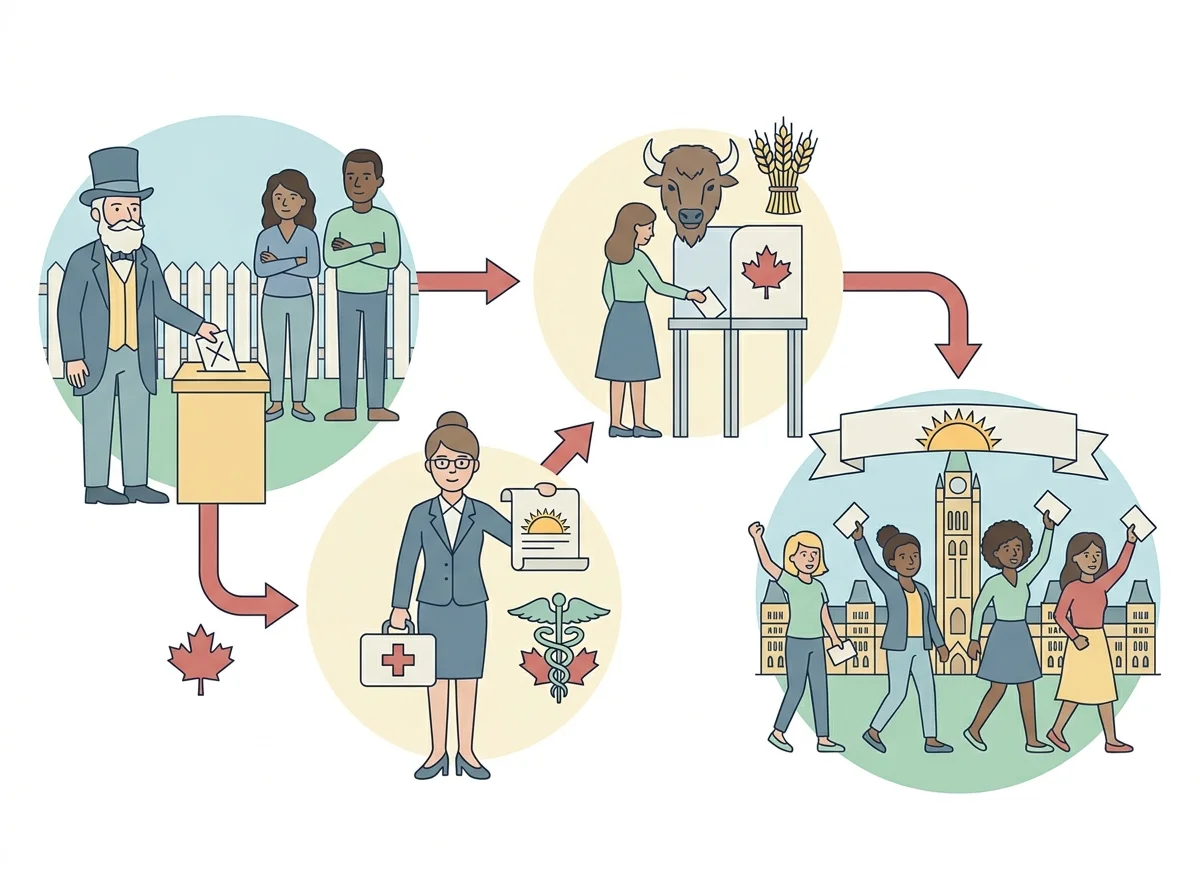
Dr. Stowe and other suffragettes led the campaign, and in 1917 Sir Robert Borden's federal government opened the vote to women. It arrived step by step. Nurses serving at the battle front came first. Next were women whose male relatives were on active wartime service. By 1918 most female citizens of Canada aged 21 and older could vote in federal elections. Agnes Macphail, who worked as a farmer and a teacher, became Canada's first woman MP in 1921. Quebec moved later: women there won the vote in 1940, after work by Thérèse Casgrain and others.
Key Facts
- 1917: Borden's government gives the federal vote to women in stages
- First to front-line nurses, then to relatives of servicemen
- 1918: most female citizens of 21 and older gained the federal vote
- 1921 Agnes Macphail becomes first woman MP; Quebec follows in 1940
Test yourself on this topic
5 practice questions from “Women Get the Vote”, each with the answer explained.
- Who founded the women's suffrage movement in Canada?
- Which province was first to grant women the right to vote, and in what year?
- Which women were the first to receive the federal vote in 1917?
- Who became Canada's first woman Member of Parliament, and when?
- In what year did Quebec grant women the right to vote?
Advertisement