
🌆 Chapter 4: Modern Canada
4.3.1 Canada and Quebec
2 paragraphs · 7 questions
French-Canadian society and culture did well in the years after the war. Then, in the 1960s, Quebec changed very quickly. That decade is called the Quiet Revolution. Many Quebecers began to want their province to leave Canada. Parliament reacted. In 1963 it created the Royal Commission on Bilingualism and Biculturalism. The commission's work led to the Official Languages Act of 1969. Under that law, the federal government must offer its services in French and in English right across the country.
Key Facts
- Quebec's rapid 1960s change is called the Quiet Revolution
- Royal Commission on Bilingualism and Biculturalism created in 1963
- Official Languages Act (1969) guarantees federal services in both languages
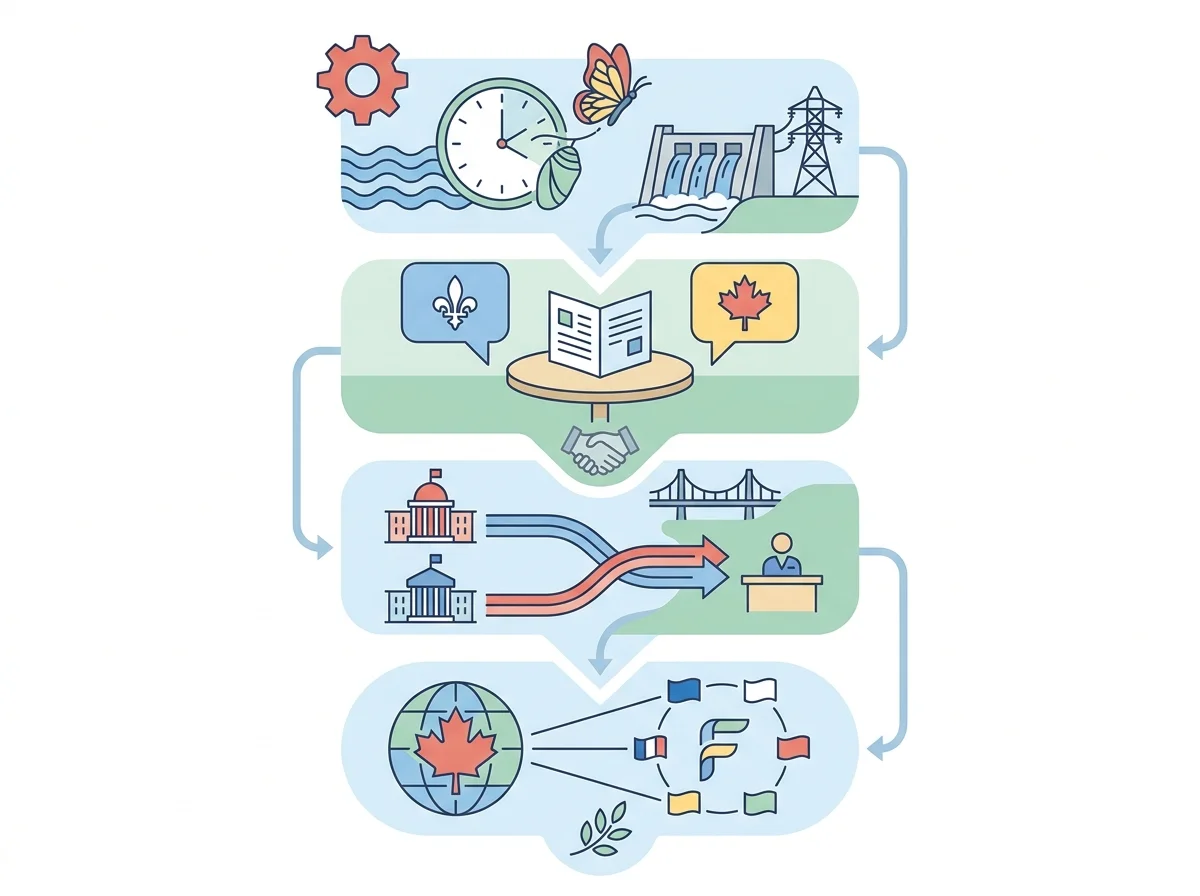
In 1970 Canada helped to found La Francophonie. That is an international association linking French-speaking countries. Meanwhile the movement for Quebec sovereignty kept growing. Voters in the province rejected it in a referendum in 1980. After long negotiations, the Constitution was amended in 1982 without Quebec's agreement. Sovereignty was put to a second referendum in 1995 and was defeated again. How much self-rule Quebec should have inside Canada is still argued about, and it still shapes the country.
Key Facts
- Canada helped found La Francophonie in 1970
- Quebec sovereignty referendums were defeated in 1980 and in 1995
- The Constitution was amended in 1982 without Quebec's agreement
Test yourself on this topic
7 practice questions from “Canada and Quebec”, each with the answer explained.
- What is the name for Quebec's period of rapid change during the 1960s?
- In what year did Parliament create the Royal Commission on Bilingualism and Biculturalism?
- Which 1969 law guarantees federal services in both French and English across Canada?
- What is La Francophonie, which Canada helped found in 1970?
- In what year was the first Quebec referendum on sovereignty defeated?
- The Constitution was amended in 1982 without the agreement of which province?
- In which year was a second Quebec referendum on sovereignty held and defeated?
Advertisement