
🌆 Chapter 4: Modern Canada
4.3.2 A Changing Society
4 paragraphs · 8 questions
Over more than fifty years, Canadian values shifted. Society became more open and more flexible. Education was a large part of this change. High schools, colleges and universities offered more places, and many people took them. Work changed too. Women entered professional jobs in growing numbers. These shifts touched families, workplaces and public life. By the end of this period, daily life in Canada looked very different from how it had looked at the beginning.
Key Facts
- Secondary and postsecondary education expanded
- More women moved into professional work
- Canadian society became more open and flexible
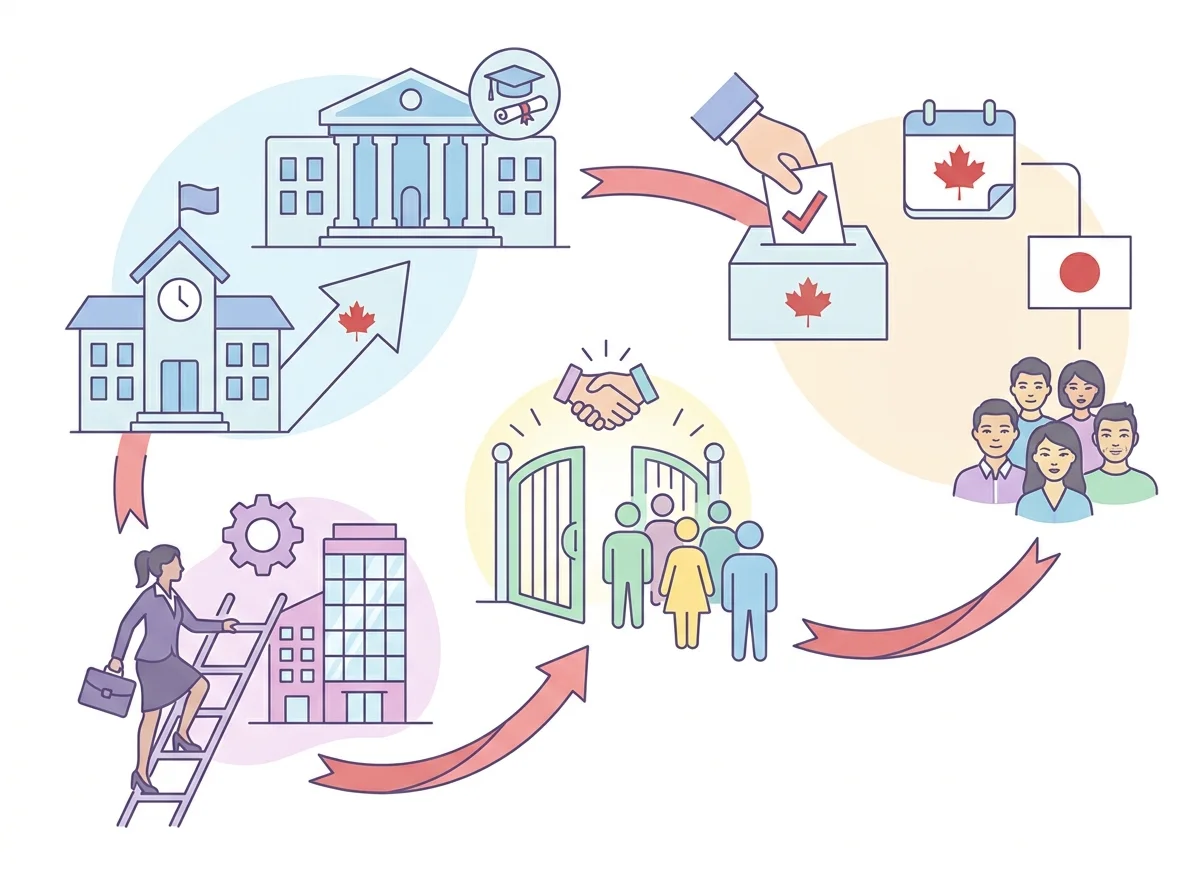
The right to vote also widened. For a long time most Canadians of Asian descent were kept out of federal and provincial elections. Japanese-Canadians were the last group still excluded. They won the vote in 1948. Aboriginal people received the vote in 1960. The rule today is simple and applies to everyone. Any Canadian citizen who is 18 or older may cast a ballot.
Key Facts
- Japanese-Canadians gained the vote in 1948
- 1960: Aboriginal people won the right to vote
- Every citizen aged 18 or over may vote
Canada opened its doors to people escaping Communist rule. In 1956 roughly 37,000 Hungarians fled Soviet tyranny and were welcomed here. In 1975 the Communists won the Vietnam War. Large numbers of Vietnamese left their homeland after that. More than 50,000 of them found refuge in Canada. Thousands of other refugees arrived from countries under Communist control. These arrivals became part of Canadian society and helped shape it.
Key Facts
- About 37,000 Hungarians came to Canada after 1956
- Over 50,000 Vietnamese found refuge after the 1975 Communist victory
- Canada welcomed thousands of refugees from Communist oppression
Immigration in the 19th and 20th centuries had already mixed the population. In the postwar years the idea of multiculturalism gained fresh strength. By the 1960s, a third of Canadians traced their family roots to neither Britain nor France. These families were proud to keep their own culture alive while belonging to Canada. That mix still makes life here richer. It is easiest to see in the country's larger cities.
Key Facts
- By the 1960s, one-third of Canadians had neither British nor French origins
- Multiculturalism grew from 19th- and 20th-century immigration
- Diversity is most visible in Canadian cities
Test yourself on this topic
8 practice questions from “A Changing Society”, each with the answer explained.
- Which group was the last of the Canadians of Asian descent to win the vote, in 1948?
- In what year were Aboriginal people granted the right to vote?
- At what age may a Canadian citizen vote in an election?
- About how many Hungarians escaping Soviet rule in 1956 found refuge in Canada?
- After the Communist victory in Vietnam in 1975, how many Vietnamese found refuge in Canada?
- By the 1960s, what proportion of Canadians had origins neither British nor French?
- What gave the idea of multiculturalism fresh momentum in Canada?
- Which change in the work force came with expanding education after the war?
Advertisement