
⚖️ Chapter 5: How Canadians Govern Themselves
5.3.2 How a Bill Becomes Law: The Legislative Process
2 paragraphs · 9 questions
A bill moves through a fixed order of stages. Stage one is first reading: the bill counts as read and is printed, so everyone can see the text. Stage two is second reading, where members debate the idea behind the bill rather than its fine detail. Stage three is the committee stage. A smaller group of members works through the bill one clause at a time and studies it in detail. Nothing is rushed; each stage has its own purpose.
Key Facts
- Step 1 first reading: the bill is printed
- Step 2 second reading: debate on the bill's main idea
- Step 3 committee stage: study one clause at a time
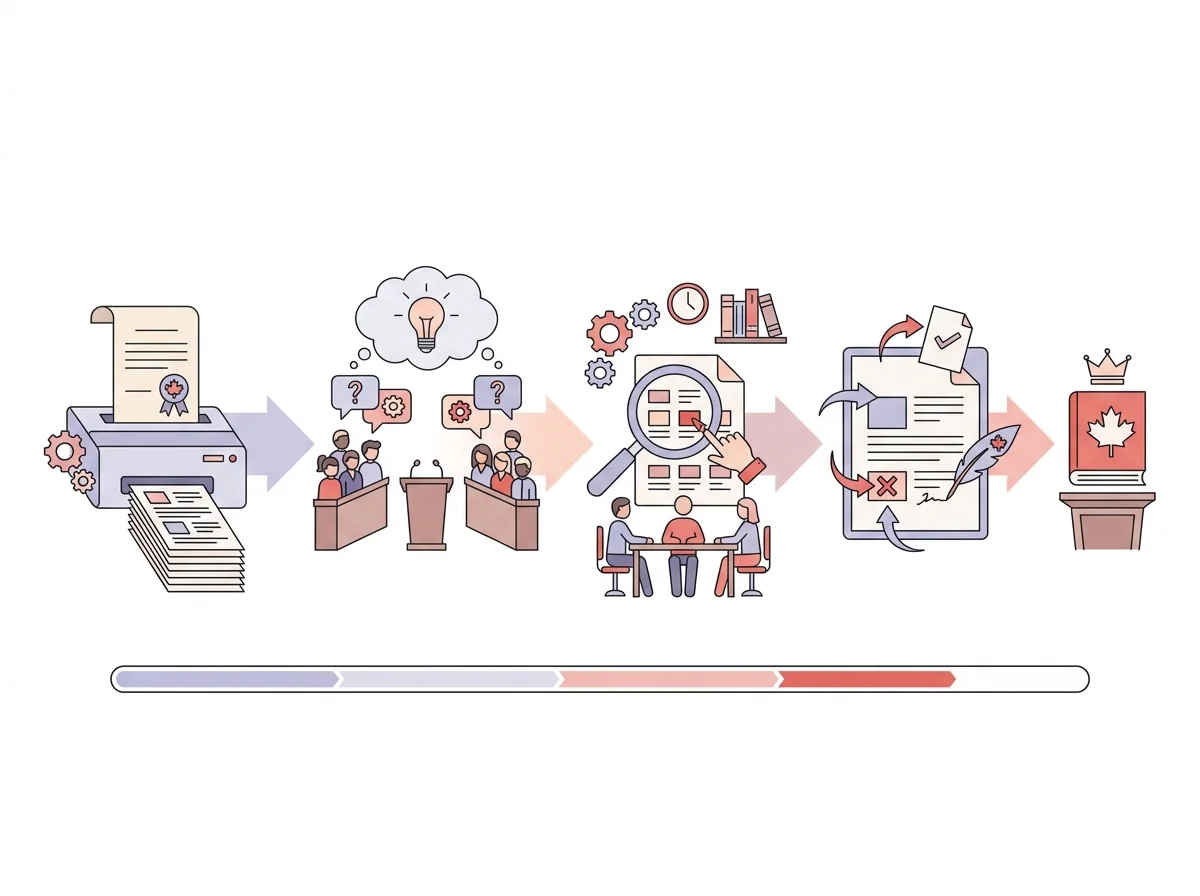
Stage four is the report stage, when members may put forward further changes to the text. Stage five is third reading: members debate the bill one last time and then vote on it. If it passes, stage six sends it to the Senate, which puts it through a similar series of stages. Stage seven is royal assent, given once both Houses have passed the bill. That makes seven stages in all, from first reading through to royal assent.
Key Facts
- Step 4 report stage: further amendments can be made
- Step 5 third reading: members debate and vote
- Step 6: the Senate repeats a similar process
- Step 7 royal assent: seven stages in total
Test yourself on this topic
9 practice questions from “How a Bill Becomes Law: The Legislative Process”, each with the answer explained.
- What happens at first reading?
- What do members debate at second reading?
- What happens at the committee stage?
- At which stage can members put forward further amendments?
- What takes place at third reading?
- Once a bill has cleared the House of Commons, where does it go next?
- Which stage comes immediately before third reading?
- How many steps are there in the process of a bill becoming law?
- How many readings does a bill get in the House of Commons?
Advertisement