
👨⚖️ Chapter 7: The Justice System
7.2.1 Laws and Who Makes Them
3 paragraphs · 8 questions
Canada is governed through an organized system of laws. A law is a written rule. Its job is to guide the way people behave in society. Laws are not handed down by one powerful person. They are made by representatives whom Canadians elect. That link matters: because voters choose the lawmakers, the laws come out of the democratic process. Laws are also written down, so that everyone is able to find out what the rules actually are. This organized, written system is what holds daily life together across the whole country.
Key Facts
- Canada is governed by an organized system of laws
- Laws are written rules that guide people in society
- Elected representatives make the laws
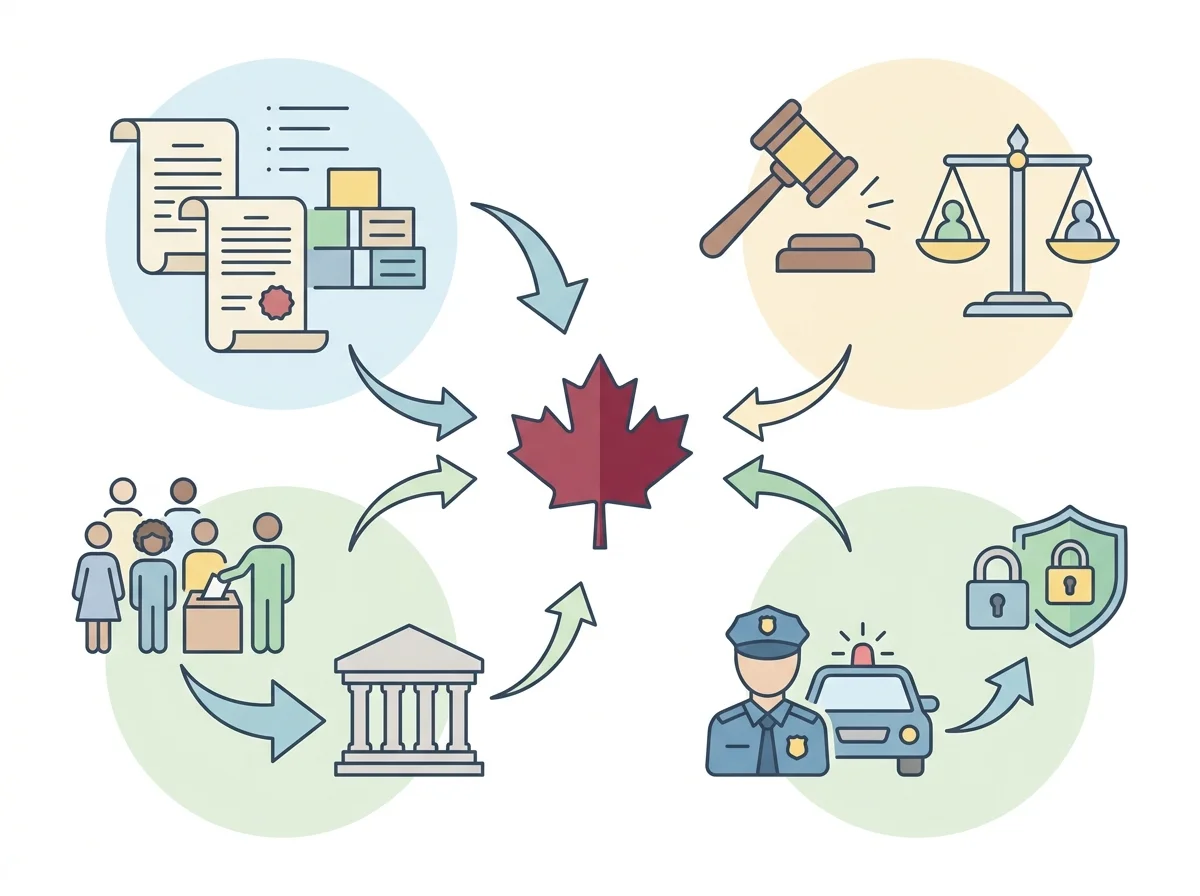
Making laws is only part of the picture. Two other groups put them into practice. The courts settle disputes. The police enforce the laws day to day. Enforcement reaches the country's borders as well — at the Canada-United States border, a guard with a sniffer dog may search the trunk of a car. One point matters above all the others: the law in Canada applies to everybody. Judges, politicians and police officers are bound by it in exactly the same way as any other person. Nobody is placed above the rules.
Key Facts
- Courts settle disputes; police enforce the laws
- The law applies to everyone, including judges, politicians and police
- Border guards with sniffer dogs inspect cars at the Canada-US border
Laws exist for reasons that go beyond punishing wrongdoing. First, they keep order in society, so that people can live and work alongside each other. Second, they give a peaceful route for settling arguments. Instead of fighting, people can bring a dispute to a court and accept the decision. Third, laws put into words what Canadians value and believe. Read together, the rules of a country show what its people think is right and important. So the legal system is practical and, at the same time, a statement of shared values.
Key Facts
- Laws provide order in society
- Laws offer a peaceful way to settle disputes
- Laws express the values and beliefs of Canadians
Test yourself on this topic
8 practice questions from “Laws and Who Makes Them”, each with the answer explained.
- Who makes the laws in Canada?
- What are laws in Canada?
- What is the role of the courts in Canada?
- Who has the job of enforcing Canada's laws?
- Who must obey the law in Canada?
- Which of these is a stated purpose of Canada's laws?
- How is Canada governed?
- Besides keeping order, what do Canadian laws express?
Advertisement