
🏛️ Chapter 3: Canada's History
3.3.3 Rebellions of 1837–38
2 paragraphs · 4 questions
In Upper and Lower Canada, reformers grew impatient during the 1830s. To them, democracy was arriving far too slowly. Some looked to American republican values, and a few wanted to join the United States. Armed rebellions followed in 1837–38. One rose in Toronto, the other in the countryside near Montreal. Public support was too thin for either to win. British troops and Canadian volunteers put the rebels down. Some rebels went to the gallows, others into exile, and a number of the exiles came back later.
Key Facts
- 1830s reformers thought democracy was arriving too slowly
- Armed rebellions in 1837–38 near Montreal and in Toronto
- Too little public support; troops and volunteers beat the rebels
- Some were hanged, some exiled, and a few exiles returned
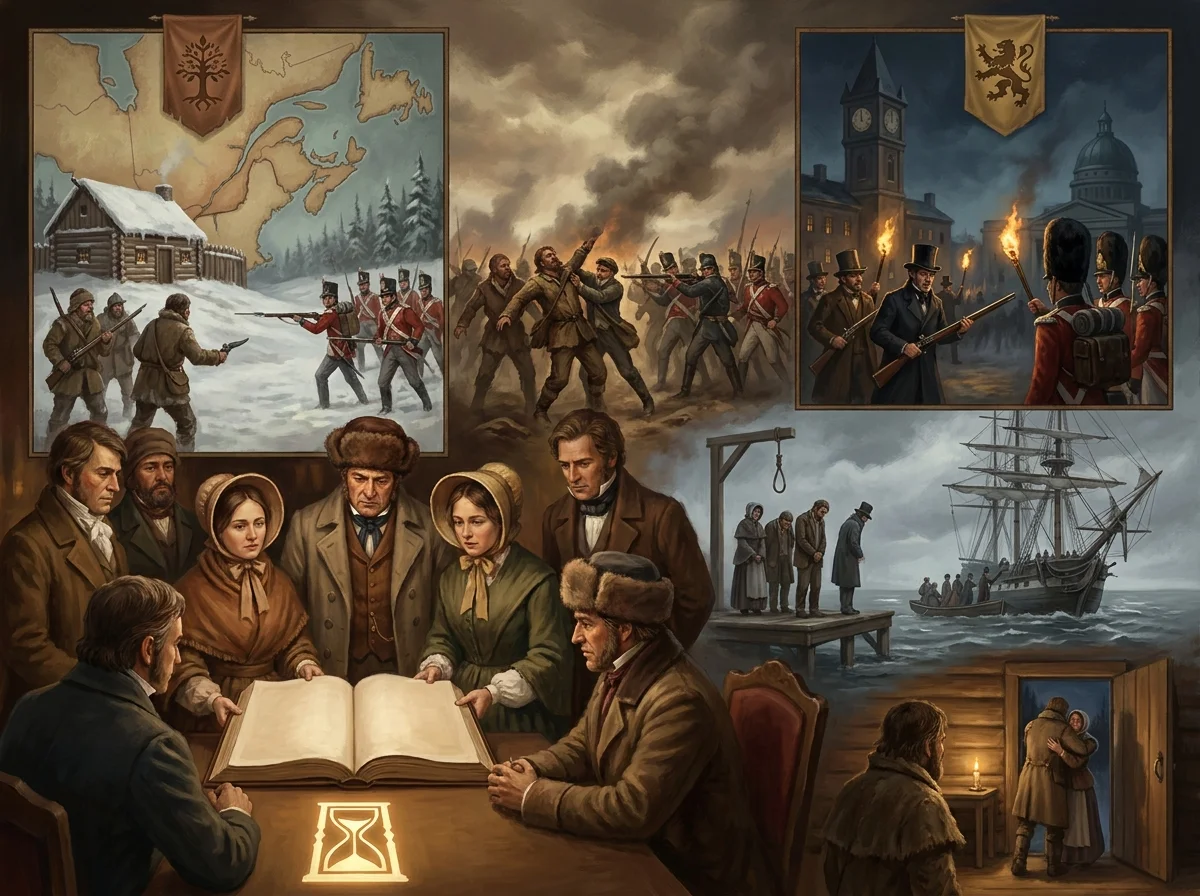
England sent a reformer, Lord Durham, to study the rebellions and report back. Two things came out of his report. First, he wanted Upper and Lower Canada joined together and given responsible government — meaning that ministers of the Crown can only govern while most elected members back them. Second, and far more controversially, he claimed the Canadiens would progress fastest by blending into English-speaking Protestant culture. On that point he understood French Canadians very poorly. They wanted French Canada to keep its own distinct identity.
Key Facts
- Lord Durham, an English reformer, investigated the rebellions
- He recommended merging Upper and Lower Canada
- Responsible government: ministers need a majority of elected members
- His assimilation advice ignored French Canada's distinct identity
Test yourself on this topic
4 practice questions from “Rebellions of 1837–38”, each with the answer explained.
- Where did the armed rebellions of 1837-38 break out?
- What did Lord Durham recommend after investigating the rebellions?
- What does "responsible government" mean?
- Which of Lord Durham's recommendations caused lasting offence?
Advertisement