🏛️ Chapter 3: Canada's History
3.4.1 Confederation
2 paragraphs · 5 questions
Three colonies sent representatives to work together on a new country: the Province of Canada, Nova Scotia and New Brunswick. Britain supported the plan. Their talks ran from 1864 until 1867, and the men who took part are remembered today as the Fathers of Confederation. What they built was government on two levels, federal and provincial. Each province would vote for a legislature of its own. Each would also run certain fields itself, among them education and health.
Key Facts
- 1864–1867: the Province of Canada, Nova Scotia and New Brunswick negotiate
- The negotiators are called the Fathers of Confederation
- Two levels of government were set up — federal and provincial
- Provinces got their own legislatures and control of education and health
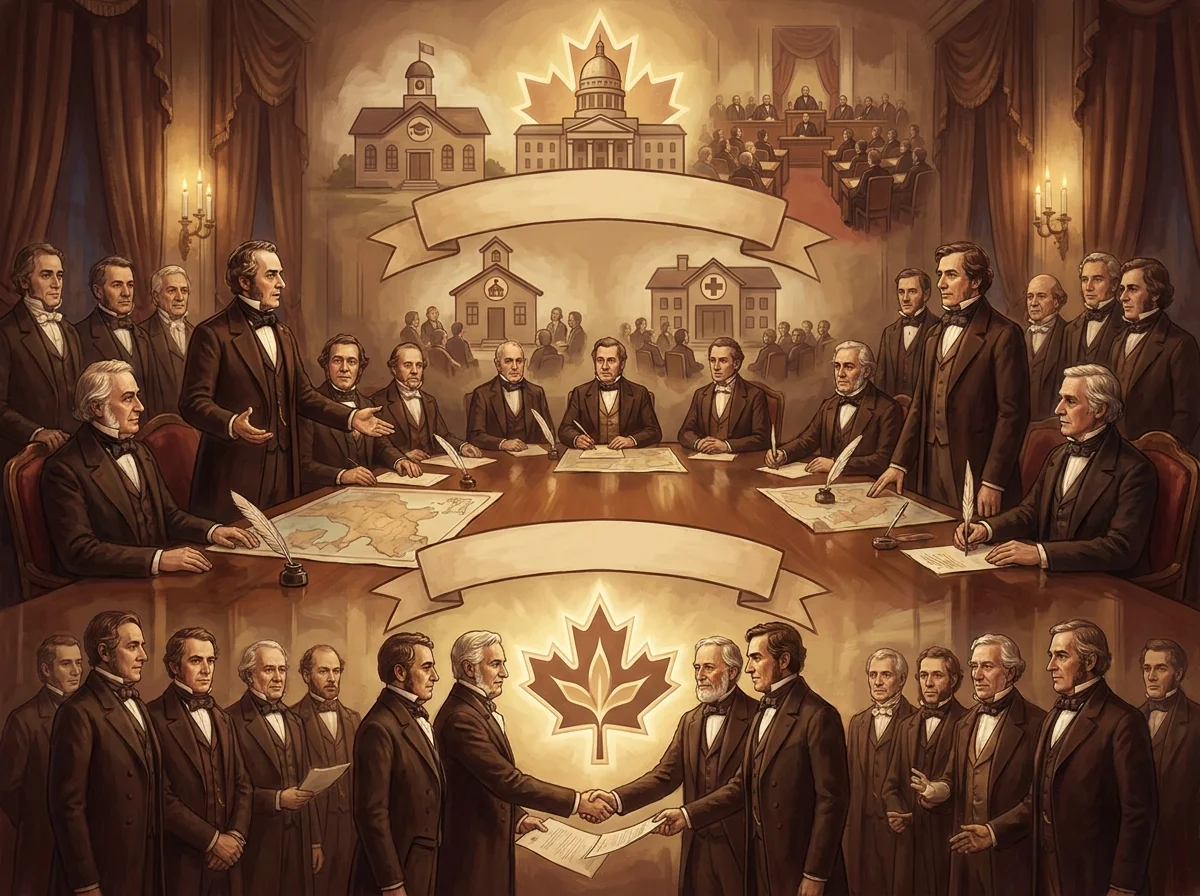
Ontario and Quebec were created by dividing the older Province of Canada in two. These two joined New Brunswick and Nova Scotia, and the four became one new country: the Dominion of Canada. In 1867 the British North America Act was approved by Parliament in Britain. July 1, 1867 is the official birthday of the Dominion of Canada. For years that date carried the name "Dominion Day," marking Canada's becoming a self-governing Dominion. The name changed in 1982, and today the holiday is Canada Day.
Key Facts
- Ontario and Quebec came from dividing the Province of Canada
- Four founding provinces: Ontario, Quebec, New Brunswick, Nova Scotia
- British North America Act approved in 1867
- Born 1 July 1867; "Dominion Day" became Canada Day in 1982
Test yourself on this topic
5 practice questions from “Confederation”, each with the answer explained.
- Which colonies sent the representatives who worked to create the new country?
- Which two levels of government did the Fathers of Confederation create?
- Which two provinces were formed when the old Province of Canada was divided in 1867?
- Which law passed by the British Parliament in 1867 created the new country?
- What was July 1 called before 1982?
Advertisement