
⚖️ Chapter 5: How Canadians Govern Themselves
5.4.1 Constitutional Monarchy
2 paragraphs · 5 questions
Canada's head of state is a hereditary sovereign, a king or a queen. The position passes down through the Royal Family; nobody is elected to it. The Sovereign reigns according to the Constitution, which means under the rule of law rather than above it. The Sovereign is also one of the three parts of Parliament. The role is deliberately non-partisan: the Sovereign belongs to no political party and does not take sides between the parties.
Key Facts
- The head of state is a hereditary king or queen
- The Sovereign reigns under the Constitution and the rule of law
- The Sovereign is one of the three parts of Parliament
- The role is non-partisan
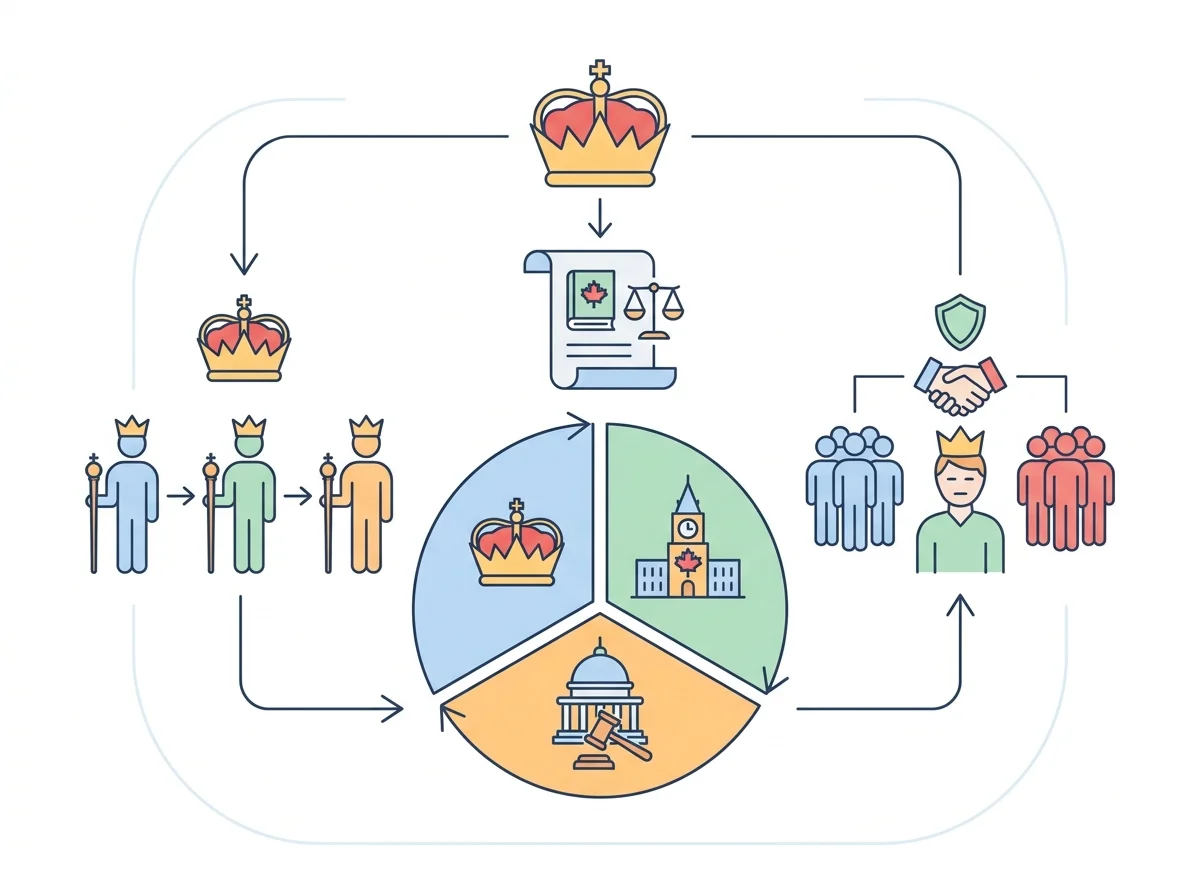
For Canadians the Crown acts as a focus of citizenship and of allegiance. That is seen most clearly when members of the Royal Family visit Canada. The Sovereign stands as a symbol of Canadian sovereignty, as a guardian of the freedoms the Constitution protects, and as a living reminder of the country's history. The Royal Family's habit of serving the community for a whole lifetime is held up as an example, encouraging citizens to give their own best to Canada.
Key Facts
- The Sovereign is a focus of citizenship and allegiance
- Royal visits make the role most visible
- The Sovereign symbolises Canadian sovereignty and guards constitutional freedoms
- The Royal Family sets an example of lifelong service
Test yourself on this topic
5 practice questions from “Constitutional Monarchy”, each with the answer explained.
- How does a person become Canada's Sovereign?
- The Sovereign reigns in accordance with what?
- What kind of role does the Sovereign play as part of Parliament?
- What does the Sovereign represent for Canadians?
- What does the Royal Family's example of lifelong service encourage citizens to do?
Advertisement